What is the circle of influence? Stephen Covey’s circles explained with examples
Stephen Covey’s Circle of Influence: A Guide to Proactive Living
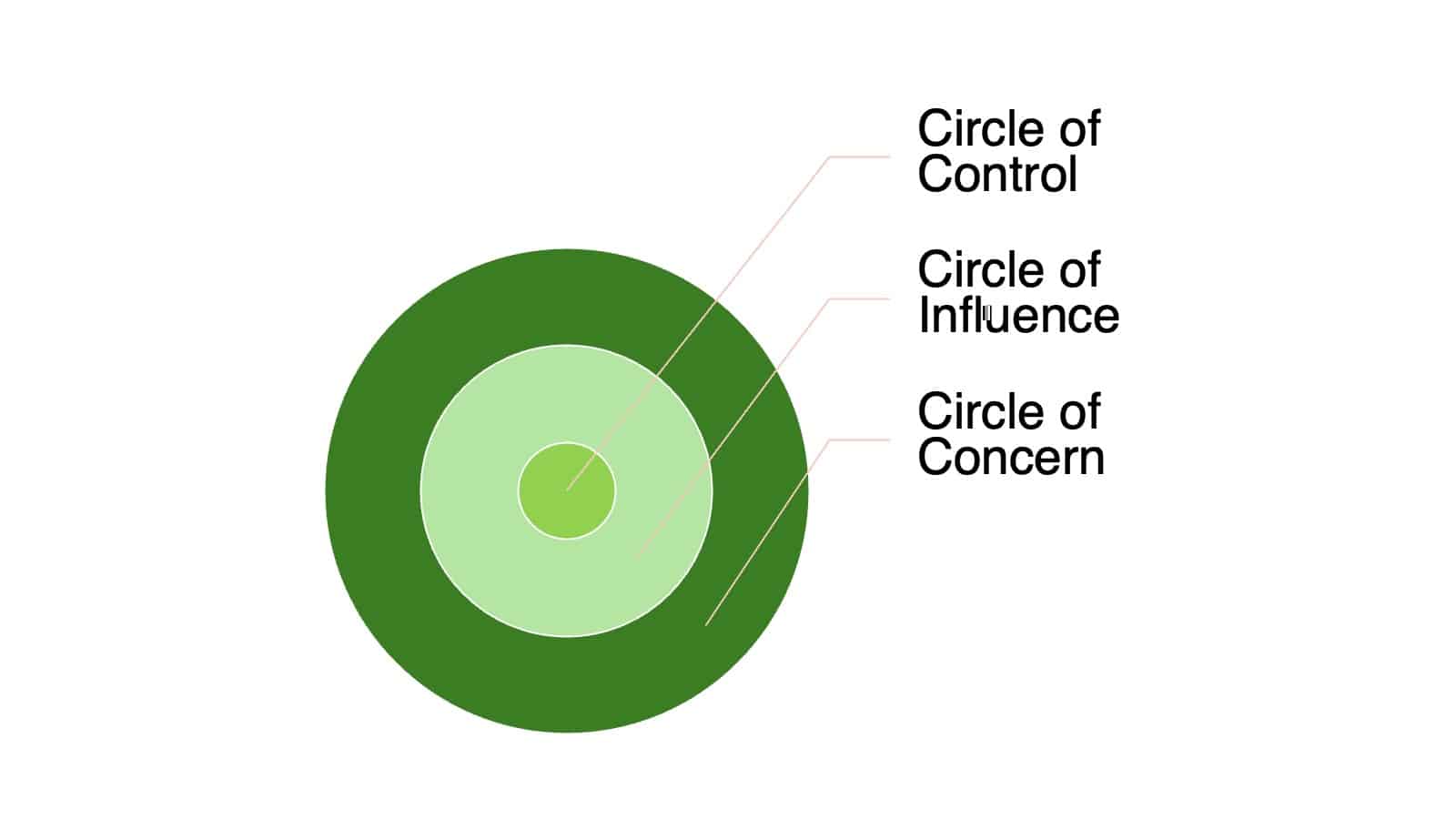
Stephen R. Covey, renowned author of The 7 Habits of Highly Effective People, introduced the concept of the circle of influence. This has developed into three key circles that shape our responses to life’s challenges: the Circle of Concern, the Circle of Influence, and the Circle of Control. Understanding these circles helps individuals focus on what they can control, fostering a proactive mindset while reducing stress and frustration.
In this article, we will explore Covey’s three circles, their differences, and how applying this principle can transform your leadership in your personal and professional life.
Understanding the Three Circles: Concern, Influence, and Control
1. The Circle of Control
At the core of the three circles lies the Circle of Control. This is the smallest yet most powerful circle because it consists of the things we have total control over, such as our mindset, attitudes, choices, and responses to situations. By focusing on this innermost circle, we gain the power to shape our reactions, which in turn helps expand our Circle of influence over time.
2. The Circle of Influence
The Circle of Influence sits between the areas of control and concern. It comprises the areas where we can directly make an impact. This includes our thoughts, actions, habits, relationships, and immediate environment. By focusing on this circle, individuals adopt a proactive approach to life, making meaningful changes and increasing their overall effectiveness.
3. The Circle of Concern
The Circle of Concern is the outer of the three circles and includes all the things we care about but cannot directly control. These may include global issues like climate change, political situations, economic downturns, or even personal concerns such as other people’s opinions, unexpected life events, or past mistakes. Spending excessive time and energy worrying about things in this circle leads to stress, negativity, and a reactive mindset.
Stephen R. Covey’s Circles of Influence, Control and Concern
The Importance of Focusing on the Circle of Control and Influence
There are several reasons why it is important to focus on what we can control and influence, rather than what we cannot, for example:
Reduces Stress and Anxiety
Worrying about things we cannot control leads to frustration, fear and stress. By focusing on our Circle of Control and Circle of Influence, we shift our mindset to constructive action rather than helplessness.
Enhances Productivity
Time and energy are valuable resources. Investing them in things we can change ensures better results and greater satisfaction.
Strengthens Relationships
When we focus on how we interact with others rather than trying to control their actions, we build stronger, healthier relationships.
Develops Leadership Skills
Effective leaders focus on their ability to influence and inspire, rather than dwelling on obstacles they cannot control.
Encourages a Growth Mindset
By proactively addressing challenges, we cultivate a mindset that sees opportunities instead of limitations.
How to Expand Your Circle of Influence and Control
Expanding your Circle of Influence requires intentional effort and mindset shifts. Here are some practical strategies:
1. Shift from a Reactive to a Proactive Mindset
Reactive individuals focus on their Circle of Concern, feeling victimised by circumstances. Proactive individuals, on the other hand, take responsibility for their actions, focusing on what they can do to improve situations. For example:
Instead of blaming traffic for being late, they plan ahead.
Instead of worrying about company layoffs, they focus on upskilling to stay valuable and employable.
2. Improve Communication and Relationships
Since relationships are a significant part of our lives, improving how we communicate can expand our influence. For instance, you can:
Choose responses that encourage cooperation rather than conflict.
3. Take Ownership of Your Actions
People who take responsibility for their actions naturally develop a stronger Circle of Control, which then strengthens their Circle of Influence. This means:
Employees who focus on their Circle of Control—such as their skills, attitude, and work ethic—are more likely to expand their Circle of Influence and succeed, rather than complain about office politics or external challenges.
2. Personal Development
Those who commit to improving their habits and mindset rather than dwelling on past failures tend to achieve more in life. By focusing on self-improvement within their Circle of Control, they gradually influence their surroundings.
3. Leadership & Influence
Great leaders expand their Circle of Influence by taking responsibility, solving problems, and empowering others rather than blaming external circumstances. They focus on their Circle of Control, making conscious choices that impact the broader system.
4. Relationships & Social Impact
When individuals focus on their Circle of Control, such as how they respond to others, they foster stronger, more meaningful relationships. Over time, this expands their Circle of Influence and allows them to make a greater positive impact in their communities.
Remember Your Circles of Control, Influence and Concern
Stephen Covey’scircles, including the Circle of Concern, Circle of Influence, and Circle of Control, offer a transformative framework for focusing on what truly matters. By shifting our mindset from a reactive to a proactive approach, we can reduce stress, improve relationships, and increase our effectiveness in all areas of life. As Covey puts it,
“At the very heart of our Circle of Influence is our ability to make and keep commitments and promises. The commitments we make to ourselves and to others, and our integrity to those commitments, is the essence and clearest manifestation of our proactivity.” – Stephen R. Covey
By applying these principles, you can take control of your personal and professional growth, expanding your influence over time. Instead of worrying about things outside your control, focus on your actions, attitude, and impact, and watch how your Circle of Control strengthens, leading to a wider Circle of Influence and a reduced Circle of Concern.
If you would like to explore other ways to increase your influence, then check out:
If you want the right answers you have to start with the right questions
About The Right Questions
The Right Questions is for people who want to lead better and make better decisions. We are all leaders as we all have influence, no matter how much or how little. So, how are you maximising your influence?
If you are unsure, just drop me a line. I would love to help!
Do you want to lead better? Would you like to make better decisions? Want support in achieving your goals? Get in touch and let me know how I can help!