10 Most Asked Questions About Leadership (And Their Answers)
Leadership FAQs
As a Leadership Coach, I spend a lot of my time discussing leadership with individuals and teams. It is a topic that relates to organisational success, business growth and people development, but what are the most asked questions about leadership?
My experience tallies with the research, and so in this article, we explore the 10 most asked questions about leadership, along with clear answers to what effective leadership looks like.
So, whether you are managing a team, starting a business, or aspiring to grow professionally, you will hopefully find some of the answers you are looking for.
Leadership has many definitions. McKinsey and Company, the consulting firm offer up this technical definition:
“Leadership is a set of mindsets and behaviours that aligns people in a collective direction, enabling them to work together and accomplish shared goals.”
In other words, leadership is the ability to guide, influence, and inspire individuals or teams to achieve a common goal. A leader sets the direction, motivates others, and ensures that everyone works towards a joint purpose.
Effective leadership goes beyond giving instructions. It involves building relationships, fostering trust, and creating an environment where people feel motivated to perform at their best.
However, my favourite definition of leadership is also one of the simplest, and it comes from leadership expert John C. Maxwell. He said that:
“Leadership is influence – nothing more, nothing less.” – John C. Maxwell
This definition is far more encompassing, and I think it helps to open the mind to leadership outside of corporate settings and job roles. You can read more about this concept of leadership in:
Many people wonder what qualities separate great leaders from average ones. While leadership styles vary, several traits consistently appear in successful leaders.
Key leadership qualities include determination or drive, confidence, integrity, emotional intelligence, and vision.
Alongside these traits, there are also accompanying skills. A good leader should have good communication skills – especially listening skills – as well as the ability to encourage collaboration, manage conflict and support professional growth.
You can read a more detailed breakdown of essential skills in:
This is one of the most debated questions in leadership discussions. The first formally recognised leadership theory is the Great Man Theory, which posits that great leaders are born to change history. You can read more in:
Thinking has developed a lot since then, but some people believe leadership is a natural talent, while others believe it can be learned.
Research in the field of leadership development suggests that while some innate personality traits may influence leadership ability, most leadership skills can be developed through learning, experience, and practice. Training programmes, mentorship, and real-world experience all play a role in shaping effective leaders.
What’s more, when we go back to the definition of leadership being influence, we can see that we are all leaders to some degree, as we all have a level of influence, even if it just on ourselves, our immediate environment and those we come into contact with.
“Everyone is a leader because everyone has a measure of influence. The choice then is: how do we develop and use that influence to lead ourselves and others better?”
4. What Are the Different Leadership Styles?
Leadership is not a one-size-fits-all approach. Different situations require different leadership styles and various leaders will also favour certain approaches, depending upon their personality and character. Some of the most common styles include:
Understanding these styles, models and theories helps leaders adapt their approach depending on the situation and team dynamics.
5. How Do Leaders Motivate Their Teams?
Motivating people is one of the most important responsibilities of a leader. Employees who feel motivated are more productive, engaged, and committed to their work.
Effective leaders motivate teams by setting clear goals, recognising achievements, providing constructive feedback, listening to their teams, and creating growth opportunities. You can read more in:
A strong sense of purpose and belonging (often expressed through a vision or mission statement and shared values) also plays a major role in team motivation. Find out more by reading:
Conflict is inevitable whenever people work together. Strong leaders understand that disagreements can actually lead to better ideas if handled correctly. If reviewing performance and giving feedback is part of an organisation’s culture, it makes it much easier to manage conflict. Using a simple feedback tool, such as the traffic lights approach, can help, as you can read about here:
Good leaders address conflict by listening carefully to all perspectives, remaining neutral, and focusing on solutions rather than blame. Encouraging open communication and maintaining respect among team members are key to resolving disputes effectively. But dealing with conflict can be hard, which is why a structured approach is helpful. Here are some simple ways to deal with challenging conversations:
Trust is not only the foundation of every successful team, but it is the basis of all productive relationships. Without trust, collaboration becomes difficult, and effectiveness suffers.
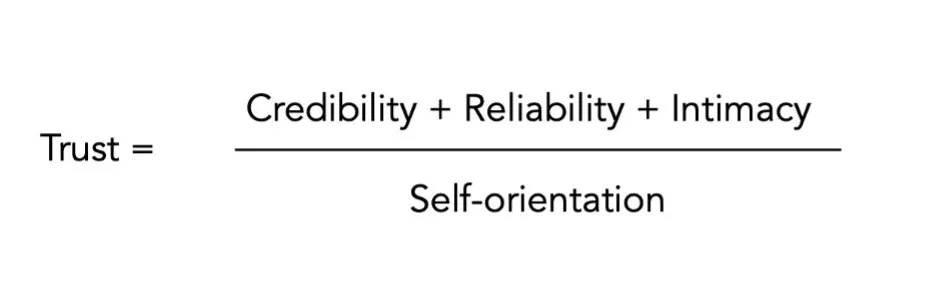
Leaders build trust by being transparent, consistent, and reliable. Research has shown that the components of trust can be expressed mathematically, as you can read about in:
Following through on commitments, admitting mistakes, and treating everyone fairly also helps strengthen trust within a team. When employees trust their leader, they are more willing to share ideas, take initiative, and support organisational goals. You can find out more in:
Leadership, on the other hand, focuses on inspiring people, setting a vision, and driving change. You can find out more about the importance of vision in:
In most situations, there is a need for both, and therefore, the most effective professionals combine both leadership and management skills to guide their teams successfully.
9. How Do Leaders Make Difficult Decisions?
Leaders are often responsible for making complex decisions that impact teams, organisations, or communities. We all make choices every day, but a leader has a particular responsibility when these decisions require careful thought and consideration.
Effective decision-making involves a process of gathering relevant information, consulting stakeholders, evaluating potential risks, and considering long-term outcomes. The decision-making process is explained here:
Leadership development is an ongoing process. Anyone who wants to become a better leader must commit to continuous learning and self-improvement. You can get a good idea of where you are in your leadership development by exploring:
Personal reflection and getting feedback is also vital to learning and continual improvement.
Gaining experience and challenging ourselves is also important. Over time, these experiences help individuals build confidence, improve decision-making abilities, and strengthen their leadership impact.
One of the proven, most effective ways to develop leadership skills is through mentorship or getting leadership coaching. You can find out more here:
Leadership is not limited to executives or managers. Anyone can demonstrate leadership by influencing others positively, solving problems, and contributing to a shared vision.
By understanding the most common leadership questions and applying the insights discussed in this article, aspiring leaders can build stronger teams, improve communication, and create meaningful impact in their situations and organisations.
Developing leadership skills takes time, patience, and continuous growth, but the rewards — both personally and professionally — are well worth the effort.
I am passionate about supporting people to be better leaders, and you can read more of my personal call to action in:
If you want the right answers you have to start with the right questions
About The Right Questions
The Right Questions is for people who want to lead better and make better decisions. We are all leaders as we all have influence, no matter how much or how little. So, how are you maximising your influence?
If you are unsure, just drop me a line. I would love to help!
Do you want to lead better? Would you like to make better decisions? Want support in achieving your goals? Get in touch and let me know how I can help!
Empowering Leaders Through Effective Coaching Techniques
What is the most important thing a leader needs to do? One of the most important things is the development of individuals within their team. This is where the coaching leadership style comes in. A strong leader not only guides their team towards achieving goals but also nurtures individual growth and development.
This style focuses on developing individuals, enhancing skills, and creating a supportive environment that fosters continuous learning. In this article, we will delve into the characteristics of the coaching leadership style and explore strategies that empower leaders through effective coaching techniques.
What is Coaching Leadership Style?
The coaching leadership style is a management approach where leaders act as coaches to their team members. It is a style that has been popularised by authors such as Michael Bungay Stanier and Simon Sinek.
Unlike more authoritarian styles, coaching leaders prioritize personal development and skill enhancement. They aim to build a collaborative environment, a place of trust and psychological safety, where feedback and open communication are encouraged.
Empathy: Coaching leaders are empathetic and strive to understand the emotions and motivations of their team members. They role-model emotional intelligence.
Active Listening: They practice active listening, giving full attention to team members and valuing their input.
Guidance and Support: Rather than dictating, they provide guidance and support to help individuals find solutions themselves.
Collaboration: They foster a collaborative environment where everyone feels valued and heard.
The coaching leadership style offers several benefits that contribute to both individual and organizational success.
Pros
Enhanced Employee Development: By focusing on personal growth, employees develop new skills and gain confidence in their abilities.
Improved Team Performance: A supportive environment leads to higher morale, motivation, and overall team performance.
Increased Retention Rates: Employees are more likely to stay with an organization that invests in their development.
Innovation and Creativity: Encouraging open communication and collaboration fosters innovation and creative problem-solving.
Cons
Time-Consuming: Coaching takes time and may not be suitable in situations that require immediate results. But, unless a problem is critical, the time invested up-front usually pays off in the long run.
Requires Skill: Not all leaders possess the skills necessary to coach effectively, which can lead to inconsistent results.
Requires skilled team-members. Coaching assumes a greater level of expertese and experience on behalf of the team. This is where a leaders needs to apply situational leadership as well, to best judge their leadership style.
Coaching Leadership Style Characteristics
To be an effective coaching leader, certain techniques and strategies can be employed to maximize the impact on your team. Here are some elements of the coaching management style:
Setting Clear Goals
Establishing clear, achievable goals is critical in guiding team members towards success. Work with individuals to set both short-term and long-term goals, ensuring they are realistic and aligned with their personal development plans.
Providing Constructive Feedback
Feedback is a cornerstone of the coaching leadership style. Provide regular, constructive feedback that focuses on specific behaviors and outcomes. Use the “sandwich” method by starting with positive feedback, addressing areas for improvement, and ending on a positive note.
Encouraging Self-Reflection
Encourage team members to engage in self-reflection. Ask open-ended questions that prompt them to consider their strengths, weaknesses, and areas for improvement. This helps individuals take ownership of their development and identify solutions.
Fostering a Growth Mindset
Cultivate a growth mindset within your team by promoting the belief that abilities and intelligence can be developed through dedication and hard work. Celebrate effort and progress, and view challenges as opportunities for learning and growth.
Building Trust and Rapport
Establishing trust and rapport is essential in a coaching relationship. Be approachable, transparent, and consistent in your actions. Demonstrating integrity and respect will encourage open communication and strengthen the coach-leader bond.
There are various types of leadership coaching, each with its unique focus and approach.
Executive Coaching
Targeted at senior leaders and executives, executive coaching focuses on developing strategic thinking, decision-making, and leadership presence.
Performance Coaching
Performance coaching aims to improve specific skills and competencies that contribute to individual and team performance.
Career Coaching
Career coaching helps individuals identify career goals, develop career plans, and navigate career transitions effectively.
Life Coaching
Life coaching addresses personal development and well-being, helping individuals achieve a balanced and fulfilling life.
Real-World Examples of Coaching Leadership Style
Successful leaders across industries have embraced the coaching leadership style to drive positive outcomes.
Example 1: Google
Google is known for its commitment to employee development and innovation. The company has implemented various coaching programs that focus on skill development, collaboration, and open communication. Their commitment to a coaching style of leadership grew from Google’s Project Aristotle research, which identified psychological safety as the most important factor in a high-performing team.
Example 2: Starbucks
Starbucks emphasizes a coaching culture where managers are trained to act as coaches, helping baristas and other employees grow personally and professionally. Brian Niccol, the present CEO of Starbucks, has emphasised the need for humility among managers and a people-first approach to leadership, balanced against the need to hit targets.
Embracing The Coaching Leadership Style
The coaching leadership style empowers leaders to unlock the potential of their team members, creating a positive and productive work environment. By focusing on personal development, providing constructive feedback, and fostering a growth mindset, coaching leaders can drive individual and organizational success. Whether you’re an aspiring leader or an experienced manager, adopting coaching techniques can transform your leadership approach and lead to a lasting impact.
Incorporate these strategies into your leadership style and witness the transformative power of effective coaching in action.
And if you would like any more information on leadership coaching or coaching for your team, do drop me a line via the Contact Page.
If you want the right answers you have to start with the right questions
About The Right Questions
The Right Questions is for people who want to lead better and make better decisions. We are all leaders as we all have influence, no matter how much or how little. So, how are you maximising your influence?
If you are unsure, just drop me a line. I would love to help!
Do you want to lead better? Would you like to make better decisions? Want support in achieving your goals? Get in touch and let me know how I can help!
Video: How to Use the Trust Equation (The Four Areas)
This YouTube video introduces the theory of the Trust Equation:
What is the Trust Equation and the four areas of trustworthiness?
Psychologically, we have an intuitive feeling about whether we should trust someone or not. Whether that is a person we have just met or someone we have known or worked with for a while, it turns out that this feeling is based on some factors that can be measured. This is where the Trust Equation comes in.
The Trust Equation was developed by Charles Green, co-author of The Trusted Advisor, along with David Maister and Robert Galford. They explored the psychology of trust by looking at professional services and how people relate to one another. The result of this study was the Trust Equation.
The equation is actually a measure of trustworthiness, in other words, how much trust we are willing to invest in a person. In this context, to have trust between two parties, you need someone who is trusting and another person who is trustworthy. The equation involves credibility, reliability, intimacy and self-orientation.
For more information, follow the link to the full article:
If you want the right answers you have to start with the right questions
About The Right Questions
The Right Questions is for people who want to lead better and make better decisions. We are all leaders as we all have influence, no matter how much or how little. So, how are you maximising your influence?
If you are unsure, just drop me a line. I would love to help!
Do you want to lead better? Would you like to make better decisions? Want support in achieving your goals? Get in touch and let me know how I can help!
How do leaders build trust? It was on one of my operational tours in the Balkans that the importance of trust in the workplace really came home to me. At short notice, I was deployed to an existing multi-national mission. I was given a team, drawn from various parts of the military, which had come together at equally short notice. As a leader, I was facing trust issues both externally and internally.
Externally, the other international partners were dubious about our commitment. The UK had been involved before but had then withdrawn. The new team was therefore met with scepticism by the very people I needed to establish good working relationships with.
Internally I had a group of people who had never worked together before and, coming from different branches of the army, were naturally prejudiced against each other. The tribal nature of the regimental system creates in-group/out-group biases that can be challenging to overcome. I knew I had work to do to change this mindset and culture.
To address these issues, I made sure I was honest about previous failings and transparent about what we wanted to contribute. Then, I picked challenging tasks, but ones we could deliver on, to help build my team together while delivering tangible results to the international headquarters. I also gave my team leaders latitude as to how they would achieve their tasks; I just mandated what they needed to do. It was not all smooth going but we did manage to develop a culture of trust both within the team and with our international partners, and because of this, we achieved our mission.
This is just one example where I have faced important issues of trust in the workplace. I can think of many more – both good and bad – where the whole culture of an organisation is affected by the trust people feel for one another.
So hopefully, with the example I have shared, we start to get an idea of why trust is important. But before we get ahead of ourselves let’s just check what we mean by trust. Which words come to mind when you think about trust? How would you define it?
Trust can be thought of as faith, belief, hope, conviction, or confidence. From these synonyms, we can start to see that trust has both a logical and emotional quality. We choose to trust a thing because of how we think and how we feel.
In relationships, trust is foundational, whether that is with friends and family, or with colleagues at work. In this context trust can be defined thus:
“Trust is the willingness of a party to be vulnerable to the action of another party based on the expectation that the other will perform a particular action.”
So, whether we are starting to get to know someone and building rapport, or maintaining a long-lasting relationship, trust is critical. But, knowing this, how do you develop a culture of trust and psychological safety in the workplace?
The neuroscience of trust
The first thing we need to understand is how our brains work when it comes to trust. Paul J. Zak has spent many years studying the neuroscience of trust (HBR, 2017). His research has centred around how the hormone oxytocin is related to trust. His work demonstrated that higher levels of trust are linked to the brain producing higher levels of oxytocin.
It is great knowing that oxytocin helps to develop trust, but it is unlikely that we will be wanting to dose ourselves with synthetic hormones just to be more trusting! Fortunately, during his research, patterns emerged of actions that promoted oxytocin levels (positive behaviours) and things that inhibited its production (such as high stress). These were narrowed down to eight key behaviours that foster trust.
The 8 behaviours that foster trust in the workplace
So here are the eight behaviours, identified by Paul Zak, that can help to release oxytocin naturally and build a more trusting culture in the workplace:
Recognise excellence
Induce “challenge stress” (difficult but achievable tasks)
Give people discretion in how they do their work
Enable job crafting (let employees choose projects to work on)
Share information broadly
Intentionally build relationships
Facilitate whole-person growth
Show vulnerability
It is worth taking some time out to reflect on these. As a leader or manager, what are you doing to foster these behaviours? As an employee, how would you rate your team on each of these behaviours?
With these eight behaviours, we have started to link the neuroscience of trust to the psychology and practice of trusting cultures. As with the cultural iceberg, we are linking what is seen in an organisation with what is unseen. But there is another model that is worth being aware of, and that is the trust equation.
The Trust Equation – understanding the psychology of trust
Charles H. Green developed the Trust Equation, along with David Maister and Robert M. Galford, co-authors of The Trusted Advisor. They explored the psychology of trust by looking at professional services and how people relate to one another. The result of this study was the Trust Equation.
The equation is actually a measure of trustworthiness, in other words, how much trust we are willing to invest in a person. In this context, to have trust between two parties, you need someone who is trusting and another person who is trustworthy. The equation gets to the heart of that relationship.
For clarity, it is worth exploring the terms that Green uses in the equation. Here are some questions you can ask to think about how someone might score against each of these terms.
Credibility (words)
Is the person professionally credible; do they live up to their CV?
Do the person’s words fit their actions?
Reliability (actions)
Are they dependable?
Will they do what they promise?
Intimacy (feelings)
Do you feel safe or secure around the person?
Do you trust that person with confidential or personal information?
Self-orientation
Is a person self-centred, putting themselves before the needs of the vision and team?
Are they self-obsessed (always framing an issue from their own perspective) or do they look at a situation more broadly?
If you want to quantify each factor you can give a numerical value (1-10) for the answer to each question. You can score someone you are thinking about (to better analyse that relationship) or you can score your team culture to examine the levels of trust within your workplace. Finally, you can also use this as a self-reflection exercise and examine how you perform in each area. Remember to think of evidence – of actual experiences – to back up your scores.
So, those are the steps to building trust. Understand the trust equation and you can quantify the levels of trust that you have with an individual or team. Then you can implement the eight behaviours to develop a more trusting culture in your workplace.
Therefore, which behaviour do you most need to work on today?
If you want the right answers you have to start with the right questions
About The Right Questions
The Right Questions is for people who want to lead better and make better decisions. We are all leaders as we all have influence, no matter how much or how little. So, how are you maximising your influence?
If you are unsure, just drop me a line. I would love to help!
Do you want to lead better? Would you like to make better decisions? Want support in achieving your goals? Get in touch and let me know how I can help!
I once had to suspend a member of my team in the middle of delivering an important project. It was a difficult decision and painful for everyone involved, but it needed to happen. The actions of this individual had eroded the bond of trust that they had with the rest of the group. As a result, the whole team was no longer working effectively. If the individual was allowed to continue, the productivity of the whole organisation would have been undermined. Trust in the leadership, team discipline and work processes would have been damaged.
The behaviour of the individual had impacted output but, in the end, it was all about trust. Trust takes time to build and a moment to lose. Helping to reinforce trust within a team, and to avoid these breaches of trust, is a vital part of a manager’s role. That is because where there is a lack of trust there will also be a lack of high performance.
Even without this example, we all know that trust is important in any relationship. But what do we mean by trust? How would you define it? And having defined it, what can we do to develop trust in our relationships at work?
Defining trust
Trust can be thought of as faith, belief, or hope. It is the feeling of confidence that we have in a person, organisation, or thing. Trust has both a logical and emotional quality. We choose to trust a thing because of how we think and how we feel.
In relationships, trust is foundational, whether that is with friends and family, or with colleagues at work. In the context of relationships trust can be defined as:
“The willingness of a party to be vulnerable to the action of another party based on the expectation that the other will perform a particular action.”
So, whether we are starting to get to know someone and building rapport, or maintaining a long-lasting relationship, trust is critical. But, knowing this, how do you develop a culture of trust and psychological safety in the workplace?
The neuroscience of trust
The first thing we need to understand is how our brains work when it comes to putting faith in someone. Paul J. Zak has spent many years studying the neuroscience of trust. His research has centred around how higher levels of trust are linked to the brain producing higher levels of oxytocin.
It is great knowing that oxytocin helps to develop trust, but it is unlikely that we will be wanting to dose ourselves with synthetic hormones just to be more trusting! Fortunately, during his research, patterns emerged of actions that promoted oxytocin levels (positive behaviours) and things that inhibited its production (such as high stress). These were narrowed down to eight key behaviours to foster trust.
The 8 behaviours that foster trust in the workplace
So here are the eight behaviours, identified by Paul Zak, that can help to release oxytocin naturally and build a more trusting and effective culture in the workplace:
Recognise excellence
Induce “challenge stress” (difficult but achievable tasks)
Give people discretion in how they do their work
Enable job crafting (let employees choose projects to work on)
Share information broadly
Intentionally build relationships
Facilitate whole-person growth
Show vulnerability
Let’s expand each one a little more.
1. Recognise excellence.
Public recognition of someone, when they have achieved something, can be a huge boost to oxytocin. If the praise is unexpected and personal it is even more powerful. Such recognition also boosts confidence.
2. Induce “challenge stress”.
Challenge stress is the idea of setting difficult but achievable tasks. These stretch targets prompt personal growth and team development as they require focus and collaboration. These are the BHAG (Big Hairy Audacious Goals) championed by Jim Collins in his book Good to Great. The balance here is to find the right level of challenge so as not to push people into negative stress and therefore managers should monitor such goals and adjust them accordingly.
3. Give people discretion in how they do their work.
If people feel empowered to do work in their way, they are likely to be more motivated and therefore more productive. This trust and freedom have also been shown to improve creativity and innovation. The opposite of this autonomy is when people are micro-managed which has opposite effects.
4. Enable job crafting.
Job crafting goes beyond discretion about how they do tasks and takes this further to allow employees to choose which projects to work on. Not surprisingly, people work harder on the things they care about. Google has famously championed this way of working, allowing employees to pursue personal projects for 20% of their time alongside normal responsibilities. The challenge for the leader is to align people with their passions while covering all the operational outputs required of a team.
5. Share information broadly.
People like to be informed; conversely, they hate it if they feel kept in the dark, even if unintentionally. This is because we all need levels of certainty to avoid negative stress. To build trust, organisations need to be open about goals, strategies, and even challenges.
6. Intentionally build relationships.
Relatedness is important. We all want to feel part of something. But you must be intentional about building a sense of belonging to build high-performing teams. Creating social events and opportunities for social interaction is very important. As mentioned earlier, achieving challenging tasks also helps build and deepen these relationships.
7. Facilitate whole-person growth.
Good leaders have and promote a growth mindset. They help people to develop personally as well as professionally. They also do not limit a person’s growth to the opportunities available within their organisation. Work-life balance, considerations such as family and health, should sit alongside discussions about performance for a person to feel truly valued and supported.
8. Show vulnerability.
Finally, people need to show each other vulnerability. Opening up to someone (in an emotionally intelligent way) is an act of trust in itself. As Brené Brown highlights in her book Dare to Lead, when a leader shows vulnerability – when they are truthful about what they don’t know, acknowledge mistakes, or ask for advice from subordinates – it actually promotes credibility and strengthens team bonds.
Encouraging positive behaviours in your team
Whether you are a leader, a team member, or a freelancer working with multiple clients, building trust is vital to effective work environments. Therefore, if you want to have good relationships and high-performing teams, seek to build trust through these 8 behaviours:
Recognise excellence
Induce “challenge stress” (difficult but achievable tasks)
Give people discretion in how they do their work
Enable job crafting (let employees choose projects to work on)
Share information broadly
Intentionally build relationships
Facilitate whole-person growth
Show vulnerability
If you are intrigued by the mindset of trust then I recommend you read How to Stop Your Primal Brain from Hijacking You at Work which explores neuroscientist David Rock’s SCARF model and the psychology behind our social connectivity. This will really help you improve your one-to-one as well as your team interactions.
If you want the right answers you have to start with the right questions
About The Right Questions
The Right Questions is for people who want to lead better and make better decisions. We are all leaders as we all have influence, no matter how much or how little. So, how are you maximising your influence?
If you are unsure, just drop me a line. I would love to help!
Do you want to lead better? Would you like to make better decisions? Want support in achieving your goals? Get in touch and let me know how I can help!
How to Judge if Someone is Trustworthy using the Trust Equation
Why is trust important? How does trust work? How do we know who to trust?
Trust is foundational to relationships, but it can be hard to quantify. For example, imagine you are away from home and need to go and see a doctor. How do you know whom to trust to help you? You look up local clinics on the internet and find two options. On one website, there is a picture of someone, straight-faced, in casual clothes, accompanied by a short statement of them telling you how good a doctor they think they are. The other site has a picture of a smiling doctor (we know this as they are wearing a white coat with a stethoscope draped around their neck). In the background, we can see various certificates and below the picture is a description of how the staff care about you and your well-being. Which doctor do you choose? Which do you trust?
This is a hypothetical example, but it does demonstrate that knowing whom to trust is a vital part of our decision-making. Therefore, it is no real surprise that neurologically we have developed powerful mechanisms to assess how trustworthy people are. But explaining how this psychology works is slightly harder as the brain works largely intuitively in assessing whether we should trust someone or not.
Fortunately, research has shown that there are common elements at work when we analyse trust. Whether that is for a person we have just met or someone we have known or worked with for a while, it turns out that this feeling is based on some factors that can be measured. And this is where the Trust Equation comes in.
The Trust Equation – understanding the psychology of trust
Charles H. Green, co-author of The Trusted Advisor, developed the Trust Equation, along with David Maister and Robert M. Galford. They explored the psychology of trust by looking at professional services and how people relate to one another. The result of this study was the Trust Equation.
The equation is actually a measure of trustworthiness, in other words, how much trust we are willing to invest in a person. In this context, to have trust between two parties, you need someone who is trusting and another person who is trustworthy. The equation gets to the heart of that relationship.
For clarity, it is worth exploring the terms that Green uses in the equation as some may not be immediately clear. To make things very practical, here are some questions you can ask to think about how someone might score against each of these terms.
Credibility (words)
Is the person professionally credible; do they live up to their CV?
Do the person’s words fit their actions?
Reliability (actions)
Are they dependable?
Will they do what they promise?
Intimacy (feelings)
Do you feel safe or secure around the person?
Do you trust that person with confidential or personal information?
Self-orientation
Is a person self-centred, putting themselves before the needs of the vision and team?
Are they self-obsessed (always framing an issue from their own perspective) or do they look at a situation more broadly?
As mentioned before, our brains usually intuitively make this calculation but, with the equation, you can quantify each factor by giving it a numerical value (1-10) for the answer to each question.
The Trust Equation (explained in less than 5 minutes)
Examples using the Trust Equation
Let’s explore this with a couple of examples.
Example 1
Firstly, let’s examine how we might perceive the local barista who serves us our coffee in the morning. I am thinking of one in my favourite coffee shop. How do they score on credibility? Well, their claim to be a barista is backed up by the fact that they work in a good café, and I have seen them serve great coffee. Therefore, let’s give them 8 out of 10. In terms of reliability, whenever someone asks for their double-shot latté that’s exactly what they get (and it tastes good too!). So, 9 out of 10 here. In terms of intimacy, I don’t know them well enough to share all my personal life with them, but they do smile, say a warm hello and address me by my name. They make me feel good, thus, let’s make that 7 out of 10. By contrast, the score for self-orientation will be low as whenever I see this person, they are always serving other people. They are asking what other people want, not talking about themselves, so we can give them a 2 out of 10. Using the equation this becomes:
(8+9+7)/2 = 12
Example 2
Now let’s take a contrasting situation. Picture a politician whom you know of but don’t necessarily follow closely. I have one in mind. This person has been a politician for some time so there is credibility there, but they have also changed their messaging on certain issues. So, for credibility, we can give them a 6. This variation in what they say and do also impacts their reliability score as I don’t feel that they will do as they promise. Therefore, this might be a score of 5. In terms of intimacy, I don’t feel I have any real connection with this person. Would I feel safe with them? I would like to think so, but I still can’t give them more than a 6. For self-orientation, the score must be higher than the barista as, even though they are a public servant, I recall that when I have seen them in interviews, they are often defending themselves. Thus, here I would give them a 7. Now, using the equation we have:
(6+5+6)/7 = 2.4
How do we compare trust equation scores?
This prompts some interesting reflections. The scoring indicates that I trust the barista more than four times more than the politician. In some ways, this is true as I have a closer personal relationship with the barista, even if it is just because we know each other’s names. And I really like coffee.
But here we expose a problem. Even though we are giving a quantitative score to trust, this is impacted by qualitative feelings and influenced by cognitive bias. The barista gives me a lovely coffee every time I see them. That has a powerfully positive anchoring effect. By contrast, the politician suffers from negativity biases, as I see them on connected with emotionally negative news. Also, if I am honest, I go to that coffee shop as it is the sort of place ‘people like me’ go to. This means I have an in-group bias towards that barista, but an out-group bias against a politician who belongs to a political party I might not support.
Finding the right comparisons
Here we have illustrated what is good news for baristas but a perennial problem for politicians. We generally love the experience of getting a coffee but are less keen on politics. As our elected leaders feel ever more distant, and all we see are the U-turns in policy or the sound bites on the news, building trust with the electorate becomes very hard.
By contrast, we might feel that we generally trust doctors or teachers, but that is often because we have some personal contact with these people. Even if we don’t know them personally, we hold their qualifications (and therefore their credibility) in high regard.
It is important to note that this comparison of the barista to a politician is also unfair. Trust is also contextual. If the barista suddenly ran for political office, then we are likely to see their scores change, particularly in the realms of credibility. A fairer, and more useful comparison would be scoring one barista against another and one politician against another. That better explains why we might choose one café over another or vote for one representative rather than another.
We all have an intuitive feeling when we trust people but sometimes, particularly when we are unsure of our feelings, it is worth quantifying them. Understanding the trust equation can help do just this and assess the levels of trust that you have with an individual or team.
Why not experiment with the equation now? You can score someone you are thinking about (to better analyse that relationship) or you can score your team culture to examine the levels of trust within your workplace. Finally, you can also use this as a self-reflection exercise and examine how you perform in each area. Remember to think of evidence – of actual experiences – to back up your scores.
If you want the right answers you have to start with the right questions
About The Right Questions
The Right Questions is for people who want to lead better and make better decisions. We are all leaders as we all have influence, no matter how much or how little. So, how are you maximising your influence?
If you are unsure, just drop me a line. I would love to help!
Do you want to lead better? Would you like to make better decisions? Want support in achieving your goals? Get in touch and let me know how I can help!