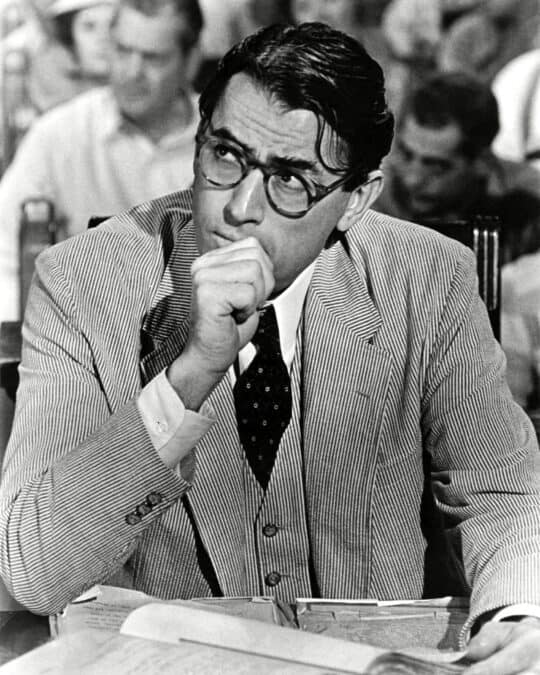
Atticus Finch: Values-Centred and Authentic Leadership
Atticus Finch as an Authentic Leader in To Kill a Mockingbird
Atticus Finch: Values-Centred and Authentic Leadership
Atticus Finch, is one of the most loved and respected characters in Harper Lee’s Pulitzer Prize-winning novel, To Kill a Mockingbird. He is often praised for his moral integrity and quiet strength. Beyond being a compassionate father and skilled lawyer, Atticus serves as a powerful example of values-centred and authentic leadership.
Authentic leaders are defined by four core qualities: self-awareness, cognitive balance, transparency, and morality. Throughout the story, Atticus consistently demonstrates each of these traits, making him a timeless model of ethical and effective leadership.
Bill George popularised the term when he published his book Authentic Leadership (2003). He set out a vision of responsible leadership, rooted in integrity, self-knowledge, and ethical decision-making.
Leadership experts such as Bruce J Avolio and William L Gardner built on this work so that now we can understand an Authentic Leader to have the following four qualities:
Self-awareness
Balanced Processing
Relational Transparency
Morality
In other words, authentic leaders act in alignment with their values, consider multiple perspectives, communicate honestly, and prioritise morality over personal gain. Atticus Finch embodies these principles in both his professional and personal life.
1. Self-Awareness: Knowing One’s Values and Limitations
Self-awareness is the foundation of authentic leadership, and Atticus Finch exemplifies this quality throughout the novel.
Atticus clearly understands who he is and what he stands for. He lives according to his personal values of integrity, empathy and justice.
Integrity
Integrity is living truthfully and in accordance with your beliefs. Atticus’s integrity is obvious when he says:
“Before I can live with other folks, I’ve got to live with myself.”
And,
“Before Jem looks at anyone else he looks at me, and I’ve tried to live so I can look squarely back at him.”
Empathy
Empathy is the ability to understand someone else’s perspective and feelings. Atticus has great empathy and encourages it in others. For example, he says:
“You never really understand a person until you consider things from his point of view—until you climb into his skin and walk around in it.”
Justice
Justice is more than just the rule of law; it is about fairness, respect and equality. Atticus takes on the case to defend Tom Robinson because of his deep-rooted sense of justice.
Atticus recognises that defending Tom Robinson will make him unpopular in Maycomb, yet he accepts this consequence because it aligns with his conscience. He tells Scout that he could not face his children if he did not take the case, showing a deep awareness of how his values define his identity.
Atticus sums up his view of justice in this way:
“But there is one way in this country in which all men are created equal – there is one human institution that makes a pauper the equal of a Rockefeller, the stupid man the equal of an Einstein, and the ignorant man the equal of any college president. That institution, gentlemen, is a court. It can be the Supreme Court of the United States or the humblest JP court in the land, or this honourable court which you serve. Our courts have their faults as does any human institution, but in this country our courts are the great levellers, and in our courts all men are created equal.”
Knowing personal strengths and weaknesses
Additionally, Atticus is honest about his limitations. He openly admits that he is not physically imposing or skilled in sports, but he does not view these traits as weaknesses. Instead, he models confidence rooted in character rather than ego—an essential trait of authentic leadership.
Cognitive balance or balanced processing refers to a leader’s ability to evaluate situations rationally by using the relevant data and fairly by considering different viewpoints.
Atticus repeatedly encourages empathy, reflecting his personal values. This mindset shapes how he approaches both the trial and his interactions with the people of Maycomb.
This is balanced with critical thinking. In the courtroom, Atticus relies on logic, evidence, and reason rather than uncontrolled emotion or racial prejudice.
Even when confronting characters such as Bob Ewell, Atticus understands the motivations behind their behaviour—fear, ignorance, and wounded pride—without excusing their actions. This balanced reasoning allows him to remain calm, fair, and principled under pressure.
For example, he says to Jem:
“Jem, see if you can stand in Bob Ewell’s shoes a minute. I destroyed his last shred of credibility at that trial, if he had any to begin with. The man had to have some kind of comeback; his kind always does. So, if spitting in my face and threatening me saved Mayella Ewell one extra beating, that’s something I’ll gladly take.”
3. Relational Transparency: Honesty and Consistency
Transparency is a hallmark of Atticus Finch’s leadership style.
Atticus is consistently honest with his children, Jem and Scout, about the realities of racism and injustice. He does not promise a fair outcome in Tom Robinson’s trial, even though he believes deeply in justice. By preparing them for disappointment, he builds trust and credibility. As he says,
“Best way to clear the air is to have it all out in the open.”
His actions also match his words. Whether he is explaining difficult moral lessons or physically standing guard outside the gaol to protect Tom Robinson, Atticus’s behaviour reinforces his beliefs. This consistency makes him a trustworthy leader within both his family and his community.
4. Morality: Leading with Ethical Courage
Morality is the defining characteristic of Atticus Finch as an authentic leader. His ethics inform his decision-making at every point.
Atticus defends Tom Robinson not because it is safe or popular, but because it is morally right. He believes in equality before the law and the inherent dignity of every human being. Even after the guilty verdict, Atticus does not lash out or become bitter; instead, he maintains his ethical integrity and respect for others.
He also teaches moral courage to his children, explaining that real bravery means doing what is right even when defeat is inevitable. This unwavering commitment to ethics, despite personal cost, is what elevates Atticus from a good man to a truly authentic leader.
This is summed up when Atticus says:
“I wanted you to see what real courage is, instead of getting the idea that courage is a man with a gun in his hand. It’s when you know you’re licked before you begin, but you begin anyway, and you see it through no matter what. You rarely win, but sometimes you do.”
Why Atticus Finch Is a Timeless Example of Authentic Leadership
Atticus Finch’s leadership is not loud or authoritarian—it is grounded in character, empathy, and moral conviction. His self-awareness keeps him anchored to his values, his balanced processing ensures fairness, his relationaltransparency builds trust, and his morality guides every decision he makes.
In a world still grappling with injustice and inequality, Atticus Finch remains a powerful symbol of what authentic leadership should look like—both in literature, film and in real life.
Remind yourself of Atticus’s authentic leadership by re-visiting the book using this link:
If you want the right answers you have to start with the right questions
About The Right Questions
The Right Questions is for people who want to lead better and make better decisions. We are all leaders as we all have influence, no matter how much or how little. So, how are you maximising your influence?
If you are unsure, just drop me a line. I would love to help!
Do you want to lead better? Would you like to make better decisions? Want support in achieving your goals? Get in touch and let me know how I can help!