The 10 Critical Core Competencies of High Performers
How do you stand out in the workplace? What core competencies must you have to be successful in business? Work in all sectors is increasingly dynamic, and in order to succeed, employees must have the ability to deal with complexity, identify critical information, make sound decisions, and collaborate effectively with people both inside and outside their immediate environment. The problem is, many people lack the skills that employers need to achieve their goals.
CEB, a member-based advisory company based in the US, has recently published research looking into this challenge and the results are of vital importance to employers and employees alike. As a consultant friend of mine noted ‘this is gold dust!’ If you are wanting to be hired or looking to hire people then you should be thinking about this list of core competencies.
But before the list, here is Conrad Schmidt, global research officer for CEB, who frames the problem in this way:
“Employees today have more ambiguous objectives and are working with larger groups of stakeholders, making both flexibility and the ability to collaborate ‘must-have’ competencies for companies seeking higher levels of performance. Important business decisions are also being made lower in the organization, putting an even higher premium on good judgment. Building the next generation of high-performers will require organizations to cultivate these skills within their employee base and to be keenly aware of the dramatic shifts occurring in today’s work environment.”
CEB looked at the performance of over 20,000 workers from across the globe, incorporating data gathered from more than 40 different organisations. The conclusion of the study was that there are 10 competencies that, when exhibited together, identify someone as a high performer. The core competencies are:
The Right Questions is a framework that can be used as a tool to address these core competencies. If you are seeking to improve in one of these areas then coaching can be a highly effective way to help you develop in these key areas.
Coaching, when done well, supports a client in achieving a specific personal or professional goal generally through facilitation of thinking. This creates an environment of learning for the coachee.
Coaching can be described as:
Unlocking people’s potential to maximise their own performance. (Whitmore 2009: 11)
Or
The art of facilitating the performance, learning and development of another. (Downey, 2003:21)
Research has confirmed that one-to-one coaching is the most effective and satisfying way to help people achieve their goals. This is compared to group coaching, teaching or self-coaching (Losch et al; 2016).
If you would like to find out more about coaching and how to find a coach then please do email me via our contact page.
Also, you might be interested in The Quest, which is an online virtual coaching course which leads on you a journey of self-discovery, improvement and success. Just sign up using the link below to try the first module for free:
Whitmore, J (2009) Coaching for Performance: GROWing Human Potential and Purpose: The Principles and Practice of Coaching and Leadership, 4th London: Nicholas Brealey.
Downey, M (2003) Effective Coaching: Lessons from the Coach’s Coach, 2nd London: Texere.
If you want the right answers you have to start with the right questions
About The Right Questions
The Right Questions is for people who want to lead better and make better decisions. We are all leaders as we all have influence, no matter how much or how little. So, how are you maximising your influence?
If you are unsure, just drop me a line. I would love to help!
Do you want to lead better? Would you like to make better decisions? Want support in achieving your goals? Get in touch and let me know how I can help!
We need to be continually assessing our decisions and learning from our actions; especially from our mistakes. This goes for everyone, but particularly for leaders.
“If history repeats itself, and the unexpected always happens, how incapable must Man be of learning from experience.”
George Bernard Shaw
Bomb disposal: where mistakes can be costly
After a couple of years of experience in Bomb Disposal, I went to Africa with my unit. We were there to clear an area that was littered with bombs of various descriptions. My troops, with the help of some local tribesmen, scoured the bush looking for anything that might go bang. They would call me up when they found something. But, as there was no shortage of ordnance, they would stockpile munitions (if they were safe to move) so that they could be dealt with in one go.
On this particular day, I was with my Non-Commissioned Officers and we went together to sort out the latest haul. The Staff Sergeant and I had passed our training together and we got on very well, so it was a pleasure to spend some time working in unison. Today we had a pile of artillery shells to dispose of, a fairly simple task.
It looked like a good plan until…
And so we made a quick plan. We worked the explosive charge we needed to use, then all we had to do was light the fuse and withdraw to a safe distance. We had not been able to get the Landrover right up to the site, because of the difficult terrain. So, we chose a spot in the distance – a hill that offered some cover from the blast – that we could walk to. We then cut the fuse to the right length in order to allow us enough time to get there.
After checking our work we lit the fuse, checked our watches and set off towards the small hill. That was to be our protective cover. We chatted about important things, such as how many letters we had received that week and how much we wanted a cold beer. The funny thing was that the escarpment was not getting any closer; so we increased our pace. Still, we laughed and joked as we walked briskly along.
But, another look at our watches gave us some cause for alarm.
There was no longer laughing or even chatting. All that was said was, “We are not going to get there in time, do you see any other cover?” We spotted what seemed to be a series of gullies over to our left so we headed towards them. Upon reaching them our relief quickly turned back to anxiety. Even though the gullies were deep, the shallow angle of the slopes would afford us little cover. We ran on.
At this point in the proceedings, I sent up one of my most eloquent prayers. It went something like this: “GOD HELP!” We only had seconds to go and so we dived into a shallow pit. We had to crouch down with our backs to the sand to keep our heads below the parapet.
The explosion
For a few seconds, the only sound was our thumping hearts, heavy breathing and the noise of a nonchalant fly investigating my hat. Then we felt the explosion – a pulse through the earth and a punch through the air. We looked at one another. No words were exchanged but much was communicated. We were both thinking the same thing: that was a bigger bang than expected; we felt dreadfully close!
I was hoping that (from the way we had positioned the munitions) the blast would be mostly directed into the ground. But then there came a sound that made me flinch. It was like an angry hornet going past my ear, and then there was another, followed by little thuds and puffs of sand as the shrapnel came down around us. As the deadly rain struck the ground there was little we could do, so I opted to laugh and my colleague used a varied, colourful (but sadly unrepeatable) string of words to express his feelings.
Learning from mistakes
When our self-induced bombardment came to an end and it was obvious we were both not only alive but also unharmed. Therefore we spent a few precious seconds enjoying the quiet. After our short pause, we decided to walk back to the site and review our procedures before moving onto the next cache of weaponry. It was obvious that we had some important lessons to learn.
“It’s fine to celebrate success but it is more important to heed the lessons of failure.”
Bill Gates
We had gone through the whole process of making and executing a plan. Something had gone wrong and therefore we needed to reflect and learn from that. In this case, a good plan was undermined by simple heuristics. I used a ‘unit of measure’ heuristic to judge the distance from where we were, to where we needed to get to for our safety. Because of the lack of features in the terrain – things like trees that I knew the size of and could compare – I inaccurately estimated the distance we needed to travel, and therefore underestimated the length of fuse needed for our controlled explosion.
This usually good heuristic was undermined by those spatial effects and my own cognitive bias. I allowed what I thought I could see to affect my perception (a framing effect) and then allowed what I thought my plan should be to shape how I interpreted the data (confirmation bias). In psychological terms, my System 1 (fast) thinking undermined my System 2 (slow) thinking.
As I walked back, post-explosion, I knew that I had other demolition tasks that I had to go to. I reflected, realised my mistake, and that reflective process allowed me to learn from the experience and avoid making the same mistake again.
Building reflection into the decision-making process
Sometimes you just can’t help making mistakes. Hopefully, as in my case, you can survive and learn from the error. To enable this we should always build in time to reflect and learn. Fortunately, if you think of decision-making as cyclical, rather than linear, then it lends itself to doing just that.
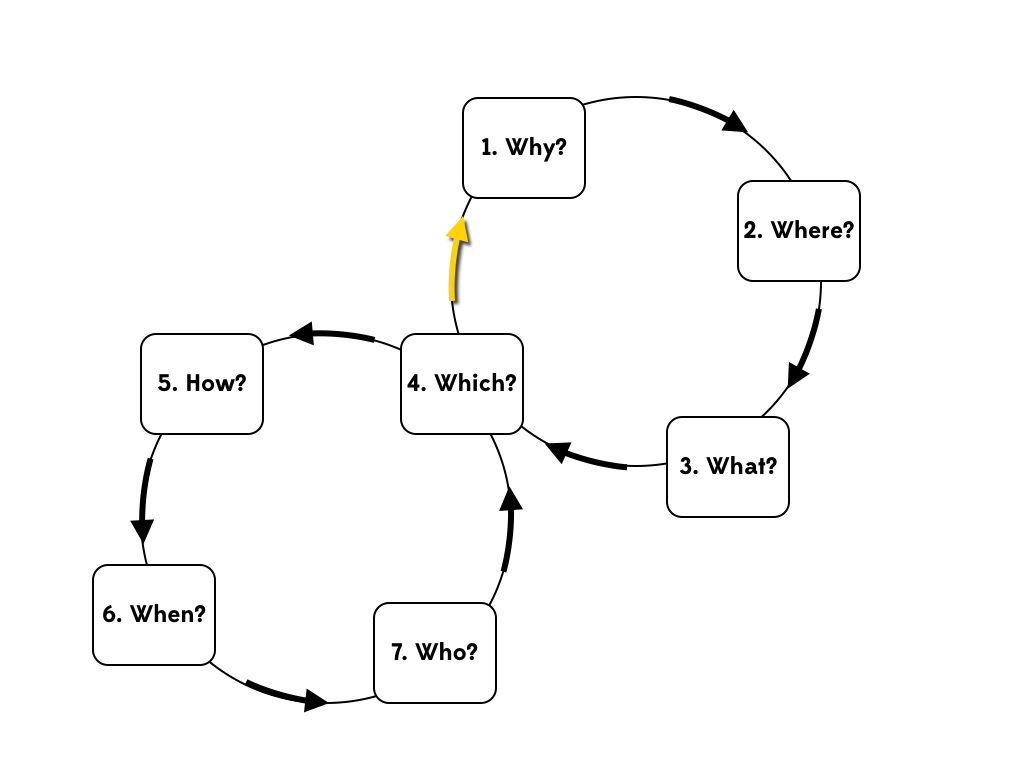
The fact is that the process of planning, looking at options and making decisions does not ever stop. We may start with a more in-depth planning process but we will constantly be making new decisions, reviewing our progress and adapting our plans. This is why the cycle of decision making never ceases, as we see in the illustration below.
The trick is, as we move forward, to make sure we take time to pause and reassess our plans as we go.
Constant change requires constant reflection and improvement
The world and our situation are constantly changing. We need flexibility in order to adapt as we go. Sometimes this happens through subtle transformation, sometimes through more formal change management. However we do it, if we want to learn and be more effective, we need a process of reviewing our actions and decisions.
This can be just taking an objective pause to reflect in the decision-making process, as happens under the ‘which’ step within The Right Questions framework (number 4 in the picture above).
When is the best time for reflection and learning?
Some pauses may be longer than others. We need pit stops as well as the end of race review; time out huddles, as well as the big post-match, debrief. It is worth planning these in through the life of a project. Sometimes it is hard to stop to review because we feel we should be getting on with something. At times like this, we need to remember progress is no good if it is in the wrong direction. We need to take time to stop and check.
In the end, when we need a post-project review, it is easy to put it in the programme but requires real discipline to actually do it. It can be hard to enforce a time of reflection at a time when people just want to celebrate or they just want to move on it to the next thing. Once you have achieved a goal, especially when it goes well, the temptation is to skip over the review. Don’t. There are always important things to learn at this stage. If you discuss them and record them, then others can learn from your experiences too.
History may repeat itself because people fail to read history, but don’t be guilty of not giving people the chance to learn in the first place. Take the time out to share.
Whatever point in our journey we have reached, after a review we can decide which things in our plan need to change and which things remain the same. Most importantly we can identify success and plan to build on it.
Failing is just learning to succeed
What about things that did not go so well? We can be afraid of failure and afraid to admit it when we do fail, therefore we need to change the way we see things when they don’t go to plan. If something has gone wrong then we can turn it into a learning opportunity.
Thomas Edison, the great empirical inventor, knew the value of learning from apparent failure. He had thousands of attempts to create an effective electric light bulb, but those that did not work he did not consider failures, just as positive proofs of how not to make a light bulb! Even after his initial patent, he continued to refine his light bulb design for decades afterwards. His approach to reviewing and applying lessons was lifelong and contributed to him being the fourth most prolific inventor in history. Edison said:
“Many of life’s failures are people who did not realize how close they were to success when they gave up.”
Thomas Edison
And that is a good lesson to end with. Not to give up, never to give in, no matter what the challenges are. Take a moment to reflect and learn right now: which heroic failures have you learned from?
If you want the right answers you have to start with the right questions
About The Right Questions
The Right Questions is for people who want to lead better and make better decisions. We are all leaders as we all have influence, no matter how much or how little. So, how are you maximising your influence?
If you are unsure, just drop me a line. I would love to help!
Do you want to lead better? Would you like to make better decisions? Want support in achieving your goals? Get in touch and let me know how I can help!
Why is prioritising the key to good decision making?
We have already seen, in the section on values, that our principles are at our centre and act as a compass to help guide us. This guidance becomes very practical in decision-making as our values help us prioritise.
Living in an age of choice
Being able to prioritise well, and therefore able to make effective decisions, is of ever-increasing importance today. Never before has there been so much information or so many choices for us to wade through on a daily basis.
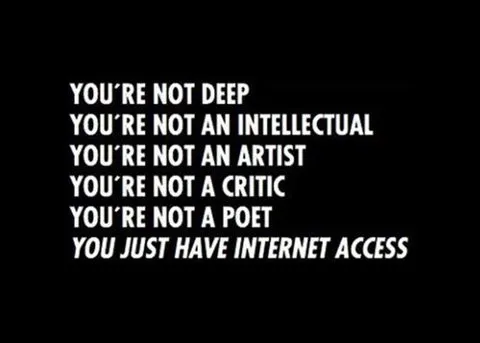
In former times, people (especially academics) were valued for what they knew; the experts in their field were the gatekeepers to knowledge on any given subject area. But that power base has been somewhat eroded in recent years and the value of being a person who just ‘knows things’ has been diminished. What is the main reason for that? In short: the Internet. In the age of the Internet, we have more information at our fingertips than ever before in the history of mankind.
Internet by Birgerking via Flickr
We also have more choice than ever before. A supermarket is a dangerous place to go without a plan. Even with two simple staples, rice and sugar, you could fill a whole trolley with the various alternatives on offer in the aisles. When you go into a coffee shop you can no longer simply ask for a coffee; such a statement would bring consternation for the barista, impatience for other customers and shame for you! We all know that we need to practise our order while in the queue. We need to say “extra-large-double-shot-skinny-soya-latte to go” with confidence!
But all this choice and information presents a new challenge; people are overloaded with information and paralysed by the number of choices available. The challenge today is not about knowing things so much as knowing how to sift, analyse and usefully apply the tornado of data that sweeps around us. Want a lesson in irony? Type ‘information overload’ into a search engine and see how many results it churns out in a fraction of a second!
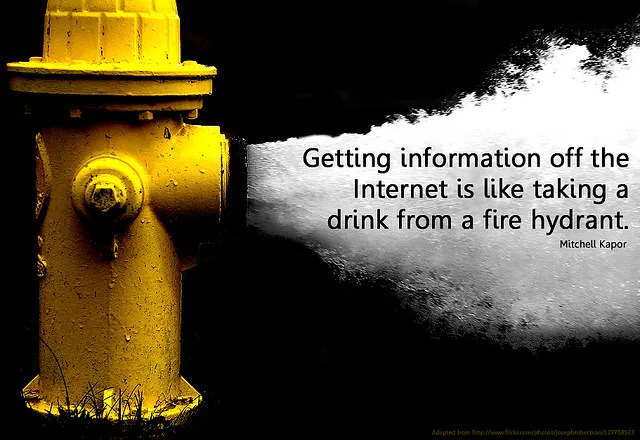
“Getting information off the Internet is like taking a drink from a fire hydrant.” Mitch Kapor
Our values aid us in the battle against information overload and potential analysis paralysis. This is important as time is spent over decisions and there is an opportunity cost even just in deciding to spend time deliberating an option. Many people today will spend hours pouring over the next gadget to buy and yet fail to give time to decisions that really matter.
Making a decision also relieves stress. The number of decisions we need to make, coupled with the importance of many of these decisions, can put us under real pressure. By reducing the number of decisions we have to make and actually committing, we can release pressure and reduce our stress levels. Introducing pre-planned systems, processes and delegation can also help.
One of the challenges that make decisions hard is that we are generally choosing between several good things. It is not just a choice between one good and one bad thing. This brings in a new challenge. As Jim Collins points out, the ‘good can be the enemy of the great’. Our limited time and resources can be used up on lots of good things but we could still end up missing the best thing.
Therefore prioritising is of critical importance. If we are going to achieve our best then we are going to have to make the right decisions. Our values will help to guide us and if you want help working out your values read:
If you want the right answers you have to start with the right questions
About The Right Questions
The Right Questions is for people who want to lead better and make better decisions. We are all leaders as we all have influence, no matter how much or how little. So, how are you maximising your influence?
If you are unsure, just drop me a line. I would love to help!
Do you want to lead better? Would you like to make better decisions? Want support in achieving your goals? Get in touch and let me know how I can help!
What you prioritise, in your work and your leisure time, is important. It has a cumulative effect – for good or ill – over time. Therefore identifying and setting your priorities is key.
Every day we make decisions that reflect our values and priorities in life. Where we choose to spend our resources of time, energy and money reflect what we think is valuable.
What does it mean to have priorities?
I started playing the guitar in my teens but I had never really improved beyond a certain (and fairly basic) level. Why? Quite simply it was because I never practised enough. It was not that I did not like playing the guitar; it was just that I enjoyed other things more.
In my dreams, I could play like Jimi Hendrix. In my mind’s eye, I could see myself saving the day at a gig, strolling onto the stage to replace an injured lead guitarist and stunning my friends with amazing solos, my fingers a blur on the fretboard! But there was a big difference between successful guitarists and me. That difference went beyond just raw talent (of which I had very little).
Guitar legends such as Jimi Hendrix or Eric Clapton would pick a guitar up at the beginning of the day and would hardly put it down until they went to bed; it is like an extension of their body. I rarely picked mine up at all. When practising I got frustrated or bored pretty quickly. If I had the choice between practising for an hour or going to the gym I would generally choose the latter.
fretboard blues fender by johnbatliner
I realised that I did not have the motivation to be the guitarist I dreamed of being because I did not value it enough. It turned out that this dream was not one worth pursuing. Therefore, because I needed time to invest in other things I decided to sell my guitars and properly pursue other dreams. I did not want the good to be the enemy of the great.
How do you prioritise your time? Which things should you do and which things should you avoid? What principles or tools do you use to help you with prioritising?
Think about pastimes for a moment. How many things do you enjoy in your leisure time? I enjoy doing lots of different things: writing, reading, watching films, drawing, listening to music, keeping fit, playing sports and many more things besides. As time has gone on and more pressures are applied to my time I decided to take a good look at how I invested the finite time that I have. It was at this point I realised that there is no such thing as free time; you can spend it at will but you cannot pay to get any more, let alone claim a free top-up.
So I decided I needed to be more focused on how I spent my time. There were several things I read that particularly helped me here. Here are three recommended resources.
The Seven Habits of Highly Effective People
Firstly I read Stephen Covey’s book, The Seven Habits of Highly EffectivePeople. This has a really practical way of prioritising tasks depending on their urgency and importance (also referred to as the Eisenhower Matrix). When analysing our time management it can be scary to see how much we spend on unimportant and non-urgent tasks. This can be surfing the web, or reading seemingly urgent (yet unimportant) emails that keep popping into our inbox. This challenged me so much that I now do not keep my email application open. I check it a maximum of a couple of times a day and prioritise the mail before I respond. I also turn off a lot of notifications on apps.
The Pareto Principle
Secondly, I read about the 80-20 rule, also known as the Pareto principle. This states that generally, 20% of our efforts produce 80% of the results. In other words, in business, 80% of profits come from 20% of your work. On the negative side, it is likely that 80% of your complaints come from 20% of your clients! Therefore, by identifying the most useful 20% of what we do (and who we work with) we can maximise that. By reinforcing success we can multiply what we can achieve. By cutting the dross we can also be more efficient.
Outliers: The Story of Success
Thirdly I read Anders Ericsson’s study (referred to in Malcolm Gladwell’s book Outliers: The Story of Success) that proposed that becoming really good at anything was more a matter of time than anything else, and around 10,000 hours of effective application was needed to excel at something (by the way, that equates to about 20 hours a week for 10 years – no small investment of time). I decided that I needed to identify my most effective gifts, time and tasks and concentrate on them. One simple application of this was how I use my day. My most productive time is in the morning, between breakfast and lunch. That is when I plan to do the bulk of my ‘productive’ tasks such as writing. The afternoon I reserve primarily for meetings, emails and things that require (for me) a slightly lower level of energy and concentration.
From my reading there are several prioritisation techniques and tools that I have adopted. I have written other posts about the ones I use most. You can read them by following the links below:
If you want the right answers you have to start with the right questions
About The Right Questions
The Right Questions is for people who want to lead better and make better decisions. We are all leaders as we all have influence, no matter how much or how little. So, how are you maximising your influence?
If you are unsure, just drop me a line. I would love to help!
Do you want to lead better? Would you like to make better decisions? Want support in achieving your goals? Get in touch and let me know how I can help!
How To Make Decisions And Use A Decision-Making Process
What is decision-making?
When was the last time you made a decision? It was probably when you decided to click on the link and read this article! So, what decision-making process did you use? How much time did you think about it? One way or another you just experienced a decision-making process. And that was but one of perhaps hundreds of decisions you have made already today.
What is a decision or choice?
Put simply, decision-making is the process of considering, and making a choice between, various courses of action.
A decision can be defined as:
“Come or bring to a resolution in the mind as a result of consideration.”
or
“Make a choice from a number of alternatives.”
Lexico (Oxford English Dictionary)
Decision-making can be further defined as:
“The action or process of making important decisions.”
Lexico (Oxford English Dictionary)
But even these definitions, though useful, can be misleading as many of the decisions we make every day are unconscious. Also, we apply process – of sorts – even to non-important decisions.
Making a choice is a process, but it is actually something we do constantly. Whether we are conscious of the process or not, we are faced with a multitude of decisions to make every day. Estimates vary as to exactly how many, but, researcher Sheena Iyengar did studies of US adults showing they made around 70 conscious decisions on a daily basis.
And there are higher estimates. Researchers at Cornell University have shown that we make 226.7 decisions each day on just food alone (Wansink and Sobal, 2007). I am guessing my .7 decision was when I nearly had that extra cup of coffee…
And that is just for choices about food! Think about all the other decisions we have to make. For example, even as I type I am making a constant string of choices of which words to use in order to express what I want to say.
Some online sources estimate that we make around 35,000 decisions a day. This estimate is based on the number of thoughts we have per second. This is not an exact measure by any means. But, what is certain, is that we have to make loads of decisions! Many of these choices are conscious ones, and these require some sort of applied process.
“Time is like a river that carries us forward into encounters with reality that require us to make decisions. We can’t stop our movement down this river and we can’t avoid those encounters. We can only approach them in the best possible way.”
Ray Dalio
The Paralysis of Analysis
Have you ever stood in a supermarket and stared for an age, weighing up a choice between similar items?
Most of us will have experienced this kind of analysis paralysis to one level or another. It happens when the choice is too great, alternatives too similar or the choice is outside of our usual frame of reference. To avoid this paralysis we often rely on heuristics – simple decision-making tools, rules or hacks – to help us make informed decisions. For example, we might prefer one particular brand or product and just pick that so we don’t have to give it too much thought. This can be an effective heuristic – to save us time, ensure quality or save money.
Using Heuristics
But, knowing about psychology, it is also these sorts of biases and heuristics that marketing experts love to exploit. To understand more on this subject then I recommend you read Daniel Kahneman’s acclaimed book Thinking Fast and Slow. Kahneman is recognised as the world leader in understanding heuristics and bias.
As Kahneman demonstrates in his research, most decisions we make are actually unconscious ones. It would take too long to use a process or explore the pros and cons of every decision. We can risk paralysis by analysis if we spend too much time on a decision, as we can become overloaded by information.
Some decisions are relatively unimportant. This could include choosing which clothes to wear, what to eat for lunch or what to watch on television. For these decisions, simple heuristics – even flipping a coin or rolling dice – can be effective.
Some decisions are much more important, such as the choice of spouse, partner, career or work. Similarly, large purchases, such as buying a property, are significant decisions. We instinctively know that we should take more time and effort over the more important decisions. The problem is that we do not necessarily understand how we make decisions. Nor do we have the tools to help us make the best choice. So how can we do it better?
What was the last big decision you made and how did you make it?
We often think of decision-making as a rational process involving our logic to solve a problem. But decision-making is not just problem analysis (although they are linked). Also, a lot of decision-making is influenced more by emotion than by logic.
This is not necessarily a bad thing. Our emotions are very important and employing them does not necessarily make a choice irrational. Emotions and passions are connected to our experiences, preferences and values.
If we were purely rational we would operate according to Rational Choice Theory. This means we would always make the choice that offers the best statistical chance of success or reward. However various scientific studies have shown that this is not the case. We are not purely rational and can be heavily influenced, by ourselves, others and circumstances to make quite irrational decisions.
The psychology of decision-making
People don’t realise that they often influence and even fool themselves. Hugo Mercier and Dan Sperber published a paper in 2011 that concluded we use our reason and logic, not to get to the truth or to make good decisions, but primarily to strengthen our position and persuade other people that we are right. This is confirmation bias, where we selectively choose data that supports our decision. This is just one example of cognitive bias.
Our circumstances also play a large part in our decision making especially if we are in stressful conditions. At the extreme level, we could be affected by the ‘fight, flight or freeze’ responses first outlined by Walter Bradford Cannon. These physiological responses have a direct influence on our psychology and may even completely override our conscious decision-making capacity.
Other people can also bias our decisions. This could be simple peer pressure or more manipulative influence employed by an individual. Our psychology can be exploited. As mentioned earlier, salespeople have long understood this, hence strategies such as creating the idea of scarcity or advertising using subliminal suggestion and product placement.
Being aware of the influences we have is very important if we want to make good decisions. Decision-making processes can help us as they encourage us to take a step back from our situation and assess it more objectively. This will not eliminate bias but it will help.
Decision-making processes also seek to identify the stages needed to make a decision so we can follow through on a choice in a logical manner. One common breakdown of the steps is shown below:
The 7 steps to a decision-making process
Outline the goal or outcome/analyse the problem
Gather data/consider factors
Develop alternatives/courses of action
Consider the pros and cons of each alternative
Make the decision
Implement the decision/take action
Learn from the decision
To some level, most people apply a decision-making process at some time, even if they don’t call it by that name. Making a list of the pros and cons of a decision is one of the simplest and most common decision-making processes. Related to this is the setting of priorities or by reducing choices by process of elimination.
One process we employ is giving our decision making to people and things. Acquiescing responsibility for a decision, as we do to our elected politicians, or delegating decision making to subordinates is a decision making process. Flipping a coin is a way of acquiescing responsibility to fate or probability (depending upon your view of the world) whereas there is also an increasing array of software that we can also use to support our decision making, or even to make decisions for us.
Why are decision making processes important?
How much training have you had, specifically on decision-making?
Despite the importance of decision-making and the general awareness of decision-making processes, very few organisations put much time and training into teaching people how to make better decisions. We gain a certain amount of critical thinking and problem analysis through our formal education but few people feel properly prepared to make important decisions in their work, especially when they may need to defend their position, demonstrate their rationale and persuade others to follow a decision.
Many existing processes within organisations support decision-making. For example, a tender process, where bids from vendors are received and reviewed, is a decision-making process. This sort of selection process takes into account factors important to a contract, such as cost, quality and the track record of a company. Voting in a meeting is another simple process. It is a democratic heuristic, testing not only how people think or feel about an idea but also then putting pressure on others to support a decision once votes are cast.
Teaching decision making
But few people – including leaders – are taught decision-making skills that can be used more generally. There are a few institutions that have recognised the importance of teaching tools and processes to their decision-makers, to equip them to make informed choices. The military and the medical profession are key examples of this. This is because those with responsibility in these professions are dealing with life-and-death decisions, often made under highly stressful and emotionally charged situations. In these careers, where people are held accountable for such weighty choices it is no surprise that a lot of thinking has gone into good decision making.
The Military Decision-Making Process of the United States Army) and the UK Military Combat Estimate Process (known as the Seven Questions are examples of these sorts of tools that share much in common and reflect the seven steps outlined above.
But the challenge I bring to leaders in all walks of life is this: even if a decision you make is not likely to be life or death, it can still radically affect the quality of people’s lives, as well as the success and profitability of an organisation. So is it any less important to make good decisions in other spheres of work?
What decision making processes are there to use?
The good news is, that even if you have not had formal decision-making training, there is help available. There are plenty of robust decision-making processes and tools around, it is just choosing the best one for you, your team and your situation.
A good starting point is understanding decision-making at its most basic and for this I would recommend looking at the OODA loop. OODA stands for ‘Observe, Orientate, Decide, Act’ and you can learn more about it in my post on The OODA Loop Decision Making Cycle.
My experience as a Bomb Disposal Officer, leadership coach and management consultant led me to develop my own decision-making process that I dubbed The Right Questions. This is a simple tool that uses the interrogative words of the English language as prompts for the steps you need to take and questions you need to ask when making decisions. You can find out more by reading The Right Questions Framework Guide.
Is decision making just for leaders?
Decision making is becoming of increasing importance to those not in traditional leadership roles. Organisations are becoming less hierarchical in structure and in today’s fluid and fast moving work place the best employees are those who can take the initiative, make and act upon good decisions.
Therefore everyone can benefit from understanding more about the way we make decisions and from learning simple decision-making processes.
And as we have seen, good decision-making is not just important in the workplace. We all have to make decisions that affect the direction of our lives. This is why as a coach I have found that processes, such as The Right Questions, can be equally as helpful in exploring the bigger questions of life.
Where are you heading? What do you want to achieve? How are you planning to get there?
Taking things further
You may want also want some help, improving your decision-making and becoming more effective at achieving your goals. I have the pleasure of seeing amazing, positive, transformations in the individuals and organisations I work with. If you would like some assistance too, in person or online, then please do drop me a line. You can email me via the contact page.
I look forward to hearing from you!
If you want the right answers you have to start with the right questions
About The Right Questions
The Right Questions is for people who want to lead better and make better decisions. We are all leaders as we all have influence, no matter how much or how little. So, how are you maximising your influence?
If you are unsure, just drop me a line. I would love to help!
Do you want to lead better? Would you like to make better decisions? Want support in achieving your goals? Get in touch and let me know how I can help!
Considering how many decisions we make on a daily basis it is amazing how little training we receive in decision-making. Perhaps it is even more surprising that – despite all our advances in science and particularly psychology – quite how hard it is to capture the complexity of human decisions.
The capacity that humans have to make decisions, be that through intuition or rational thought, is something that sets us aside from everything else on the planet; be that animals or computers.
In an ever faster-paced and changing world, with growing access to information and choice, it is of growing importance to understand decision-making. If we want to become comfortable with uncertainty, risk and change; if we aspire to embrace learning, innovation and growth, then we need to be better at making decisions.
We all can make better decisions, but if you are a leader or manager, and your decisions affect the people and organisation you are responsible for, then this skill is of critical importance. It is no surprise that decision-making is recognised as a vital leadership skill.
How do we get better at decision-making?
To be more effective at decision making we need to look at questions such as: is intuition or rational thought better for making decisions? How do we make logical or ethical decisions? Can we even classify decisions in these ways? Can we override our biases and fallacies? When are statistics and decision-making models effective and when not? Which approaches and tools can help us? How can we think more effectively?
Here are some reviews and summaries of great books to help you on this journey. You will capture a glimpse of how amazing your brain is while getting a feel for its limitations. You will learn to embrace your innate ability to make superb decisions along with being more cognisant of the heuristics and biases we all harbour. Armed with this knowledge you can develop strategies, and choose the right tools, to help make the best decisions in the various situations you are confronted with.
If you like the look of any of the books just click on the pictures to link to their reviews on Amazon.
Thinking Fast and Slow is an international bestseller by Daniel Kahneman. Kahneman’s book is perhaps best known for his helpful and widely used classification of decision-making into system one; intuitive (fast) decision-making and system two; logical or rational (slow) decision-making. The book distils several decades of research on cognitive bias, prospect theory and happiness. It is highly instructive, especially in understanding the intellectual challenges we face when making decisions.
Malcolm Gladwell’s bestselling book Blink is all about our amazing ability to make fast and effective decisions. In other words, it is about intuitive thought and how we know things without knowing. At the heart of this book is the idea of keeping decision-making simple and avoiding the ‘analysis paralysis’ that can be the result of too much information. It is full of fascinating examples and insight and provides an interesting counterpoint to Kahneman’s Thinking Fast and Slow.
In his book Thinking, John Brockman, publisher of Edge.org, brings together a selection of essays and transcripts in this book that explore various facets of thinking and decision-making from leading psychologists, philosophers and neuroscientists. The book is intellectually challenging and tackles diverse issues such as desire, intuition, morality, statistics, rationality and human nature. I found the content humbling, as it opens the door to the amazing complexity of the brain and how much we still have to learn. It does not serve particularly well as an introduction to decision making but if you are interested in the subject then it does expose you to some of the leading thinkers and ideas in this field of psychology.
In Time to Think,Nancy Kline demonstrates that the quality of our thinking depends largely on the situation provided for us to think within. In particular, Nancy shows the empowering nature of focused attention and how active listening enables us to think better. The concept of ‘The Thinking Environment’ outlined in this book can help to transform your work meetings and personal relationships. The book is a rallying call to improve not just the way we work, but the way we approach life. I found it inspirational, I think you will too.
Steve Peters is a psychiatrist and sports psychologist who has worked extensively in the field of elite sports, and most notably with British Cycling. The Chimp Paradox seeks to explain, in simple terms, how the mind works and how to manage thoughts and emotions in order to be more confident, effective and happy. Although the book does not set itself out to be about decision making per se, the mind management model – that compares the emotional ‘chimp’ mind to the logical ‘human’ mind – is very much related to Kahneman’s systems one and two thinking or intuitive and rational decision making.
The Decision Book is a highly practical guide to 50 decision-making tools that can be employed in various circumstances. It is broken down into four sections looking at; how to improve yourself, how to understand yourself better, how to understand others better and how to improve others. Even if you already know and use a few decision-making techniques you can guarantee that there are more in this book to challenge and inspire you.
Ciadini’s book Influence is one of the ‘go-to’ works on marketing and why people say ‘yes’. Ciadini’s research outlines the various ways we influence other people (and get influenced ourselves) when making decisions. Whether you are trying to impact someone else’s way of thinking or wanting to be aware of what sways your own decision-making, this is a must-read.
Nudge theory looks at our biases and how we can subtly influence behaviours to make better decisions. Thaler and Sunstein look at decision-making on a social scale and how changes in behaviour have large social impact. It is therefore no surprise that the book has been popular with policymakers among others. The book is a good companion to Cialdini’s book on Influence.
In The Black Swan, Taleb brilliantly, boldly (and somewhat brashly) puts forward arguments for the limitations of statistical analysis and how statistics are often very poor predictors of the future, especially in complex fields such as economics. Knowing this he puts out a rallying call that we should embrace uncertainty and leverage random opportunities as they arise. Prepare to be challenged!
Lateral Thinking is a classic text on creative thinking. De Bono explains how the mind works, and then sets out various inventive methods to inspire lateral thought. This is essential reading on problem solving and compliments other approaches to slow thinking. The book champions divergent thought as opposed to purely vertical, convergent decision-making methodologies.
Just like Spinal Tap, our top ten goes all the way up to 11 with the inclusion of The Dice Man. This cult classic by Luke Rhinehart is controversial but worth a look. A fictional premise of a man who gives over every decision to a throw of a dice. It is not there to tell you how to make better decisions (such as the non-fiction titles above) but it will certainly get you thinking more about your decisions!
And if you want some good ideas for audiobooks then click here.
If you want the right answers you have to start with the right questions
About The Right Questions
The Right Questions is for people who want to lead better and make better decisions. We are all leaders as we all have influence, no matter how much or how little. So, how are you maximising your influence?
If you are unsure, just drop me a line. I would love to help!
Do you want to lead better? Would you like to make better decisions? Want support in achieving your goals? Get in touch and let me know how I can help!
I have been fascinated by the art and science of making better decisions ever since being trained as a bomb disposal officer back at the beginning of my career. Since then, I have worked in various sectors and in numerous senior management roles. I have learned that the need to make good decisions is critical to every leadership position. What is more, working as a leadership coach, I have found that a large part of my coaching is helping people think about choices they must make and assisting them in effective decision-making.
We all have the ability to make choices, but making effective decisions is not a given. The good news is that decision-making can be learned, and by applying simple models you can ensure you will make better decisions and develop your competency as a decision-maker.
Important vs non-important decisions
My experience, coupled with my reading and research, has led me to these ten steps that I recommend to anyone needing to make an important decision. I say important decision as most of the time it is not worth sweating over the small stuff. If we overthink every decision, we can suffer from analysis paralysis. For smaller, less critical decisions we can use heuristics (rules of thumb) or simple hacks to help with choices. We don’t want to spend an age deciding what coffee we are having today or scrutinise every item we select at the supermarket.
So, what is an important decision? In this case, I am talking about are the larger choices we must make in life. Decisions about our vocation, our life direction, or our loved ones. If you are considering a new job, a romantic partner, a new home, or something else of a similar magnitude, then it is worth following these steps.
The first thing, when faced with an important decision, is to pause. Take time to make your decision. We all face stimuli, external forces that we need to react to. Each stimulus leads to a response. The gap between the stimulus and our response is called the decision space. This is where we engage our brain rather than just relying on instinct. Our reactions and intuitive responses can be very helpful, but we should try to use our head, as well as our heart, whenever we can.
Even when faced with an imminent, life-threatening decision it is (more often than not) worth taking just a micro-pause to think before you act. For example, if you are hiking in the woods and you are suddenly confronted with a bear then everything inside of you might be screaming at you to turn and run. This is the natural fight or flight response. But running is not the recommended option. The National Parks Service recommends that you identify yourself, stand your ground, wave your arms, and remain calm. Doing that requires a moment to think, control yourself and decide to do those things. They are not a natural response.
Most big decisions are not so life-threatening, or so time-critical, that we cannot take time out. Therefore, set aside time, put it in your diary and avoid other distractions so you can objectively think about the choice you have to make.
2. Identify the type of problem
The next thing to work out is the sort of problem you are facing. Maybe you did not even realise there are different sorts of problems, but there are, and the nature of the problem relates to the sort of solution you want to pursue.
One of the best-known frameworks for classifying problems is that of Keith Grint who developed the idea of critical, wicked and tame problems. Critical problems are ones that need immediate action and clear direction. The example of coming face-to-face with a bear would come into this category. Wicked problems are ones with no known solution and may not even have an endpoint. These require novel approaches, creativity and finding the least-worst outcome. Tame problems have known solutions and can be managed with the right expertise. Most problems we face are actually tame. Other people have faced and overcome the same issues, which is good news for us, as we can get advice and learn from other people’s experiences as we seek to make our own decisions.
3. Apply a decision-making process or model
Once we know the type of problem, we can choose a model or process to help us think through the problem and make our decision. Have a look at tools and frameworks that other people have used to make similar choices.
There are lots of different tools you can use. You may already be aware of some common ones such as the SWOT analysis or GROW model. These generic tools can be applied to many decisions, but it is worth doing some research as you may find that there are specific tools that can help with your particular situation. Resources such as The Decision Book (Korgerus and Tschapeler) are a great place to start as it has 50 different models to try.
4. Ask questions
Whichever model you choose you will find that it is generally a structured process of asking questions. Each tool aids us by giving a framework of questions for us to consider. You can even use question words, or interrogatives, as a framework. That is one of my favourite approaches and one I have used since my days as a bomb disposal officer.
You can do this by writing down the main interrogatives of why, where, what, how, who, when and which. Create your own open questions relating to your specific issue. My recommendation is to start with why questions, as I will explain next.
5. Understand what really matters
As you start to develop your questions you will have to answer why the decision really matters. This is probably the most important thing to get straight in your mind before you go further. I agree with Simon Sinek in that we should ‘start with why’ when facing a problem or decision.
Asking why helps to delve into our motivation and priorities around the choice we are making. It makes us think about how our personal values relate to a given issue. Our principles guide us in the decisions we make. The hardest choices usually force us to prioritise and select between things we value. We can only make these kinds of choices if we are truly aware of those underlying values.
Once we have established our values, we can assess the various factors and constraints that we face in our situation. These factors will vary dependent upon the choice we are making. If we are choosing a home then factors might include the size of the property, its proximity to our workplace and whether it has a garden. Constraints are likely to include what we can afford and how far we can realistically commute.
7. Identify assumptions
It is good to gather data to help inform our decision, but we can never have all the information we might like or need. Therefore, we must make some assumptions in the absence of that data.
For example, we cannot know everything about someone we are attracted to. Whether you are at the point of asking them out for the first time or committing to them for life, you have to make that decision based on incomplete knowledge.
So, assumptions are essential, but we must be careful about making false assumptions just as much as ignoring key factors. Let’s say the person you are attracted to loses things. That is a factor. You might miss that fact, you might choose to discount it, but assuming someone will simply change is likely to be a false assumption. I can attest to this!
We can also make harmful false assumptions about ourselves. We can undermine our own decisions with these defeater beliefs. For example, we might discount ourselves from even asking someone out just because we feel we are not good enough.
At this stage of the process, having someone else to assist you can be really helpful. An objective friend, a mentor, coach, or counsellor is more likely to help you unearth and challenge any false assumptions you might hold than if you just try and do it yourself. If it really is an important decision, get a third party involved, even if that just means phoning someone you trust to talk it through.
8. Consider your options
Once you have considered the situation, with all its factors and assumptions, you can then come up with different potential courses of action to address the problem. Very few issues have only one solution and usually, there is a plethora of advice and options that you could choose from. Therefore, once you have come up with a long list of ideas you can start to whittle the list down to the most attractive options.
You can use your values or an assessment of factors to help choose between options. One simple approach is to use a scoring system in a grid. List the options then score them against the principles or factors that are most relevant. The highest scoring course of action should be the best one.
9. Think through the consequences
When considering your options, you should also think about the consequences. Work out the risks related to any course of action and think forward to imagine what could happen if you followed that route. Once again here you need to rely on certain assumptions so make sure they are reasonable ones.
Also, don’t discount the consequences of not making a decision. Delaying, avoiding, or actively not doing anything is a choice in itself. What is the opportunity cost of not deciding now, or in the future? Sometimes doing nothing is the right choice but make sure it is an active and considered decision.
Also, remember that you can’t always be right and sometimes things just don’t go your way. Don’t worry. Most decisions are reversible, even if they do come at the cost of opportunity, time, money, or heartache. Some of our most important life lessons come from mistakes if we choose to learn from them. Things can also turn out better than expected. For example, joining the Army was not my first career choice but it turned out to be a great opportunity and I would not go back and change that if I could. Remember, at the end of the day – however things turn out – we have a choice about how we respond to events.
10. Make and act upon the decision
Finally, once you have thought things through, you must commit. You must choose and take action. Once decided you then act; you have to physically ask that person, press that button, make that purchase, or whatever it is to turn your choice into a reality. The first step really matters.
My recommendation is that you record the process you used and the decision you make. That way, however it goes, you can reflect back on your approach and the outcome. Journaling can help with this but there is no one right way. The important thing is that you can reflect on your choices and learn. In that way, the decision-making cycle also becomes a learning cycle, and you will get better at making decisions.
Over to you
So that’s it. Whether you are setting yourself an audacious goal, picking a career, or choosing a life partner you can start with these ten steps and be confident that you will make a better informed and more effective decision than if you did not follow any process. You might have flipped a coin or gone on a gut feeling alone – and it might even work out – but you will be leaving a lot to luck and you will be missing out on a chance to improve your decision-making.
If you want to build your confidence and competence today and practice before you apply this to something really big, then you can use this same process for a slightly smaller choice. That might be something bigger than which TV series to watch after work but not as significant as changing your job. For example, you could plan a future vacation, where you want to go, with whom and what you want to do. Whatever you choose, take the time out to go through all the steps, record your thoughts and your decision.
If you would like any further assistance with improving the decision-making skills for yourself or your team, please do drop me a line via the Contact Page.
If you want the right answers you have to start with the right questions
About The Right Questions
The Right Questions is for people who want to lead better and make better decisions. We are all leaders as we all have influence, no matter how much or how little. So, how are you maximising your influence?
If you are unsure, just drop me a line. I would love to help!
Do you want to lead better? Would you like to make better decisions? Want support in achieving your goals? Get in touch and let me know how I can help!
Have you ever been caught out by heuristics? I have!
Cowering in a ditch, I knew that there was a good chance I could be killed or seriously injured by the explosion that was just seconds away. While awaiting my self-induced demise, I had a short time to consider my hubris.
I was a bomb disposal officer. I had been trained to deal with dangerous devices and I also had operational experience. So, if I was such an expert, how did I get into this mess? In a critical situation, despite my training, I had made an error in my decision-making.
Pride comes before a fall
Let’s leave me and the ditch for the moment and let me ask you a question:
How do you make good decisions?
Have you thought about the process of making choices? It turns out that, although we can all make decisions, the psychology is quite complicated. If you had asked me that same question back then, early in my career, I would have talked to you about the power of logical thought and how a systematic approach to decision-making would ensure good decisions.
Well, I was learning the hard way that there is more to decision-making than just assessing factors and choosing a course of action. There are also things called heuristics that – when used poorly – can spoil our plans.
First, let’s get back to me in that ditch. In fact, let’s wind back a little and see how I got there.
The day had started well. It was beautiful. The sky was so big and blue I could stare at it and just lose myself there, wrapped in the warmth of the sun, as I waited for a call from my squad. I was doing what I loved, leading my team, trying to make the world a safer place by removing dangerous objects from this magnificent African landscape. And it was fun too, blowing stuff up is fun (until you are caught up in the explosion that is).
On that day there were over a hundred people out scouring mile after mile of the countryside looking for dangerous material. This could be unexploded artillery shells, mortar rounds and even the occasional big bomb. When they found something, they would call me, as they did that day.
I was hailed on my radio and was given a location some miles away. I drove as close as I could in my Landrover 4×4 with my colleague and then we advanced the last mile or so on foot; when the terrain got too difficult. We turned up to find a large pile of artillery shells that needed to be disposed of.
Situational analysis
At this point, our training and experience kicked in. We used our question technique to assess the situation and came up with a plan.
We had been instructed to use the 5Ws to help assess a situation. The 5Ws are the interrogative words of the English language: what, where, when, who and why. The other common interrogative of ‘how’ was generally added to these 5Ws.
The 5Ws would provide a structure to understand the situation. For example:
What are we dealing with? In this case a pile of old artillery shells
Why are they there? They have been fired from guns, but the fuse mechanisms have failed to detonate on impact
Where are they? Located in a difficult to access area of bush. So what? We will have to go in and out on foot
Who is in danger? Just my colleague and I; the rest of the area is clear for miles
How can they be disposed of? Correct application of plastic explosive and a manual timed fuse
The answers to the questions informed our plan. And, as we did not have our vehicle nearby, we needed somewhere close that would provide us with some cover. We looked around and chose a small hillock in the distance that looked promising. We estimated how long it would take us to walk there and then cut the fuse to the correct length.
Bomb disposal: if you see me running, try to keep up
After checking our work, we lit the fuse, checked our watches and set off towards the small hill that would give us cover. We chatted about important things such as how many letters we had received from home that week and how much we wanted a cold beer. The funny thing was the escarpment was not getting any closer. Our pace increased.
We laughed and joked, and we walked briskly along but looking at our watches gave us some cause for alarm. We broke into a run. There was no longer any laughing or even chatting. All that was said was: “We are not going to get there in time, do you see any other cover?” We spotted what seemed to be a series of gullies over to our left, so we headed towards them. Upon reaching them our relief quickly turned back to anxiety because the shallow angle of the gully slopes would afford us little cover. We ran on. At this point in the proceedings, I sent up a quick prayer, and with only seconds to go we dived into a shallow pit and crouched down with our backs to the sand. We had to compress ourselves to keep our heads below the parapet of the depression.
Going out with a bang?
For a few seconds, the only sound was our thumping hearts, heavy breathing and the noise of a nonchalant fly investigating my hat. Then we felt the explosion – a pulse through the earth and a punch through the air. We looked at one another. No words were exchanged but much was communicated. We were both thinking – that was a bigger bang than expected; we felt dreadfully close!
Next, there was a sound that made me flinch – it was like an angry hornet going past my ear – and then there was another, followed by little thuds and puffs of sand as the shrapnel came down around us. As the deadly rain struck the ground there was little we could do, so I opted to laugh and my Sergeant used a varied, colourful (but sadly unprintable) string of expletives to express his feelings.
When our self-induced bombardment came to an end, and it was obvious we were both not only alive but also unharmed, we spent a few precious seconds enjoying the quiet. The same solitary fly, who seemed oblivious to the proceedings, was still taking an interest in my hat.
Not surprisingly the whole experience made me ponder about my decision-making.
Well in this case one good decision-making tool had been undermined by another. My plan for dealing with the bombs was sound, but it was let down by the simple heuristic that I employed to choose my cover.
When judging distance, I was unknowingly using a scaling heuristic, in other words, I was estimating how far away the hillock was due to its size. The problem is this method only really works well if you have a regular-sized object – such as a person or vehicle – and something to compare it with. In this case, I was looking at a hill – I did not know its actual size – and there was nothing else in the bare landscape to compare it with. The hill was a lot bigger and farther away than I estimated.
“This is the essence of intuitive heuristics: when faced with a difficult question, we often answer an easier one instead, usually without noticing the substitution.”
Daniel Kahneman
What is a heuristic?
A heuristic is a simple decision-making hack or rule of thumb. We use these all the time in our thinking and choices.
One example would be how we choose things when we shop at the supermarket. Most of the things we pick up will be the same items we usually get. If you examine your groceries, most will be from suppliers that you know and regularly use. We do this largely to save us from making endless decisions. If we had to start again every time we went to the shops – not knowing what we liked or could trust – then it would take an age to select each thing.
Considering the bewildering number of choices that are on offer in most shops these days. Without this simple heuristic, we could suffer from analysis paralysis. In other words, without a simple way to make decisions then the processing power of our brains could get overwhelmed by the sheer quantity of data.
That is why manufacturers fight so hard for brand recognition and product loyalty. They know they if they can make you switch to their product then you are very likely to stick with it. That is why they are willing to cut prices and make special offers to tempt you to switch your habits.
And that is just one example of a heuristic. We use these thinking tools in everything from catching a ball to choosing where we sit in a cinema.
Are heuristics good or bad?
Heuristics are not bad in themselves. As mentioned, they are useful mental short-cuts that save us time and generally help us to make quick effective judgements. But each heuristic is a simplified model so it cannot take in all the complexities of a situation. Therefore, heuristics must rely on certain assumptions. Once again, assumptions are not intrinsically bad, but some assumptions can be wrong, or just inaccurate in some circumstances.
That is why we need to be aware of the heuristics we use and when we are using them. Going back to my example, there is nothing wrong with the scaling heuristic. Using relative sizes and distances is a well-known and very useful tool for judging distance. The problem was that I applied the tool bluntly, not considering if any of my assumptions were wrong. The reason for my assumptions being wrong was due to cognitive bias, in this instance confirmation bias (but that is another subject for another post).
Use heuristics but beware of hubris
I had a good process for making decisions (using interrogatives) but in this story, one little mistake nearly cost me my life and that of my colleague. In my case, it was my estimate of distance that undermined my plan. My hubris or overconfidence was enough for me to not examine my assumptions.
That does not mean that the heuristic or the rest of the plan was bad. Far from it. Using heuristics, having a decision-making framework and other planning tools can help us make better decisions.
But, as we plan, we must be cognisant of the heuristics and other processes that we are using, especially if those decisions are important. If we are choosing a coffee, fine we can take a risk and assume the barista knows what they are doing and can make a coffee. But if you have a bigger decision to make, such as getting a builder to extend your house, then it is worth examining your options, not just assuming anyone can do the work just because they say so.
So, if you want to make better choices today ask yourself two questions.
What heuristic or process am I using?
What assumptions am I making and are they correct?
Then you will be on the path to better more effective decisions.
If you want the right answers you have to start with the right questions
About The Right Questions
The Right Questions is for people who want to lead better and make better decisions. We are all leaders as we all have influence, no matter how much or how little. So, how are you maximising your influence?
If you are unsure, just drop me a line. I would love to help!
Do you want to lead better? Would you like to make better decisions? Want support in achieving your goals? Get in touch and let me know how I can help!
How Cognitive Bias Influences Thinking And Decision-Making
Saying that someone is biased is often used as criticism. We point out when someone obviously favours a person or thing more than another. Bias is synonymous with being prejudiced and that has even more negative connotations. Being prejudiced means having an opinion not based on reason or reality. Thinking of that sort leads to bad judgements. In other words, we associate bias with poor thinking and bad decision-making.
“The way a particular person understands events, facts, and other people, which is based on their own particular set of beliefs and experiences and may not be reasonable or accurate.”
So, bias has an individual flavour to its complexity, but research has shown that there are some common trends as to how our bias manifests. In the ever-increasing body of scientific study about cognitive bias, the best place to start is with Daniel Kahneman’s book, Thinking Fast and Slow.
To explain the title, fast thinking (also called system 1 thinking) is the intuitive, often unconscious judgements that we make. Slow thinking (or system 2 thinking) is the more (seemingly) logical, conscious thought process that we employ. Neither system is better than the other, they are just different. Kahneman’s research shows that both systems are influenced by cognitive biases, and we generally choose to ignore these influences in our decision-making.
“Our comforting conviction that the world makes sense rests on a secure foundation: our almost unlimited ability to ignore our ignorance.”
Therefore, bias affects all thinking, and decision-making is just one such thought process influenced by cognitive biases.
The way the brain works when making choices is a marvel of creation. The neural substrates that support our decision-making are not fully understood but, when we make choices, our brain is a lightstorm of synaptic activity, igniting the prefrontal cortex and pulsing out into the hippocampus, posterior parietal cortex and striatum.
Even before we know what we are thinking, our network is leaping into action. Dendrites are stimulated and neurons are firing signals through the axons to other neurons at an astonishing rate.
Ironically, thinking about decision-making like this is mind-boggling!
Thinking of the brain simply as a computer is a poor analogy but, as with computer processing, the brain loves speed. And, to be as fast as possible, firing neurons love to take shortcuts. These shortcuts can help us make judgements at much greater velocities, but as I have already talked about with heuristics, these shortcuts can get us into trouble at times. They have nearly killed me on occasion! Closely linked to heuristics and these shortcuts are cognitive biases.
An example of my biases laid bare
I was wondering how to illustrate the effect of bias on our thinking and decisions and then something happened to me that made me examine many of my own biases. Let me share it with you.
Simon Sinek is one of my favourite writers and speakers and earlier this year Simon Sinek gave a talk about work and how we should love what we do. As ever, Simon’s message was heartfelt and compelling. There was so much I could agree with. I generally do love my work. As a leader, I want the people who work for me to love what they do, and I feel the responsibility for creating that psychologically safe environment where people do feel supported and allowed to flourish.
The funny thing was that I had a little niggle in the back of my head, telling me something was not quite right. So, I watched it again. Afterwards, reflecting on what Mr Sinek was saying, I was able to identify what had got my spider-sense tingling.
What makes a statement true and why do we believe it?
There were a couple of statements that I started to re-examine. The first one is:
“It is a right, it is a God-given right, that we should love where we work.”
Simon Sinek
As Simon says those words my heart is saying “Amen brother!” but my head is saying, “Is that actually true?”
So, I examine the statement again, leaning on the wisdom of others and the power of logical syllogism. The philosopher Karl Popper would start by pointing out that the statement is a non-scientific fact. The statement is not phrased as a logical premise, and it cannot be disproven by scientific means.
If you add theologians into the mix, they will point out that holy books such as the Bible or Koran don’t exactly say that loving work is a God-given right. The emphasis is on loving God and other people rather than work itself.
So, let’s use Simon Sinek’s own advice and “start with why” when we think about his statement. Why does he say that? The statement is actually a rhetorical device, used for emphasis and emotional response. And in those terms, it achieves its ends. But that leaves the question, why do I want the statement to be true, even if it isn’t a fact?
This is where we come to the flaws in my processing. My thinking is being influenced by multiple biases at once.
The first thing that I am experiencing is the Halo effect. In other words, I am likely to agree with whatever Simon Sinek says because I like and respect him. I expect him to be right. There is also an immediate anchoring effecttoo because when I see Simon Sinek, I think of Start With Why, a book I really enjoy. Therefore, I am expecting to like what he says. This leads to an acquiescence bias, so I am more likely to agree with any statement Simon makes.
Sinek is also a leadership guru and talks about things I care about, so I am also suffering from In-group bias, where I favour other leadership geeks; we are the same tribe. Hot on the heels of these preconceptions is groupthink. The interviewer and the people in the audience all seem to be nodding and smiling. I want to go with the consensus. What’s more, no one is challenging what he is saying so there is also a bystander effect. I am not going to make myself look stupid and say something might be wrong if they all seem to agree with him.
Yes, there are more biases yet!
Next is optimism bias. Simon Sinek is a self-proclaimed optimist, so it is not surprising that his message is alluringly optimistic. Also, I want it to be true – as I want to love all my work all the time – so confirmation bias creeps in. I hold to the belief that we can love work, so I start to suffer from belief bias too. I am also suffering from the just-world hypothesis by expecting things to be fair and for people to get what they deserve. Unfortunately, that is not reality.
That one line of logical fallacy is wrapped up amongst a host of other statements that I agree with and so there is also a framing effect. What I see as the validity of the whole talk influences the context in which I judge any one phrase.
And there is more. As I learn more about leadership, the more I realise that there is so much I don’t know. This is the Dunning-Kruger effect. So, I want to learn, and Simon Sinek is an expert I respect, so I naturally doubt the limits of my own knowledge. When I think about my own abilities, I have a negativity bias and suffer from imposter syndrome; therefore, I doubt myself even more.
The tip of the cognitive iceberg
So, I managed at least 12 cognitive biases in the space of two minutes! And that’s just the ones I can easily identify. There are many more biases and if you would like an introduction to a few more of the common ones then I recommend you visit yourbias.is
So, what am I trying to say? That what Simon Sinek says is bad? No, far from it. I remain a fan even if I cannot agree with every single thing he says. And that is fair enough, I don’t think I would agree with everything that has come out of my own mouth if I could only remember things accurately (rather than suffering from misinformation bias)!
The example I used was to demonstrate the dizzying quantity of cognitive biases that can be at play every time we think about something.
You are biased, but don’t panic. Reflect.
The takeaway point is that bias affects us all, all the time. And the tricky thing about bias is that it is hard to spot in ourselves (although seemingly we are able to spot it more easily in other people!)
“We can be blind to the obvious, and we are also blind to our blindness.”
Daniel Kahneman
If we want to think clearly and make effective decisions, we need to be aware. We cannot avoid cognitive bias but, if you are aware of your thought processes, you can reflect and critique your own thinking.
You can put your newfound knowledge into practice by having another look at the Simon Sinek interview yourself. There is much to enjoy in what he says but there is also at least one more logical fallacy or false statement in there. Can you identify what it is?
And, when you scroll through your social media today think about your reactions to what you are seeing. How are you being influenced? Which biases can you identify in your own thinking?
Congratulations! You are creating the foundations for better thinking and more effective decisions.
If you want the right answers you have to start with the right questions
About The Right Questions
The Right Questions is for people who want to lead better and make better decisions. We are all leaders as we all have influence, no matter how much or how little. So, how are you maximising your influence?
If you are unsure, just drop me a line. I would love to help!
Do you want to lead better? Would you like to make better decisions? Want support in achieving your goals? Get in touch and let me know how I can help!
Assumptions are often necessary for critical thinking and decision-making, but we need to avoid wrong suppositions if we want to make the right choices. We can get things wrong by applying assumptions in inappropriate circumstances, basing expectations on bad data, or making assumptions based on wrong thinking.
I have experienced the results of decisions made on poor assumptions and, in the process, learnt a lot about how best to avoid them.
A truly immersive cinema experience
I was in my room, watching the Lord of the Rings (The Return of the King) on my laptop. I had my earphones in and, despite the small screen, I was gripped. It was the battle of Minas Tirith, and the city was surrounded by an evil horde of orcs with their siege engines. As the army attacked the city and the rocks flew from the catapults, pounding the citadel I could almost feel the walls shaking. Another huge stone soared through the air to strike. Boom! My chair wobbled.
The sound on my laptop was good but I had definitely felt something. I took out my earphones and listened. The was a crashing sound, this time from outside my room, not from my computer.
Bother I thought, we are under attack.
This was a fair assumption as I was in a military base just outside Basra in 2004. It just turned out that, in a weird bit of synchronicity, that the local militants had decided to attack our base with rockets, just when I was enjoying a bit of downtime and watching a movie. Very inconsiderate of them I thought.
So, I put on my helmet and body armour and – doing my best to exude calm – walked out of my room into the chaos outside, then headed to the operations room. All the while I was thinking, “we expected to be welcomed; we were coming to help after all.” How wrong we were!
Assumptions, critical thinking, decision-making and planning
There is a phrase about presuppositions, famous in military circles:
“Assumptions are the mother of all f***-ups”
Anon
This is not entirely true, but it does highlight the fact that bad assumptions can have disastrous effects. In the Army, when judgements often have life or death implications, making a wrong assumption could be fatal, as I nearly found out while working as a bomb disposal officer in Africa. And again now, in Iraq, it was turning out that the decisions and planning were based on some very poor assumptions. As a result, the situation was a mess.
What is an assumption and are all assumptions bad?
An assumption is something we accept to be true, even if we are lacking all the evidence. But assumptions are not necessarily bad. We often need to make assumptions in decision-making as we cannot have absolutely all the information we want or need when making a choice.
For example, when I go to buy a flat white from a coffee shop, then I assume that the barista knows how to make one. I will probably look for information to back up that assumption such as, whether they list a flat white on the menu.
Therefore, I am checking for data to support my assumption.
To reduce the risk of the assumption I might also employ a heuristic (a decision-making hack), such as going to a shop I know and trust, to reduce the risk of getting a bad coffee.
So now I am trying to narrow down the context to one where my assumption is sound.
However, if I employed that same assumption in the wrong place or without checking my data, I might be disappointed.
For example, if I visited a coffee house in Istanbul, then I should not assume to get a flat white. It would be a bad assumption and I would also be missing out on some excellent Turkish coffee due to my biases!
So, we can make assumptions in our thinking but first, we need to separate out what is a fact and what is an assumption. Once we identified an assumption then we must be sure it is a reasonable one, particularly if we take an assumption we often make and then apply it to a new context.
Some assumptions are not just applied to the wrong situation, they are based on corrupt data in the first place. We can compound the problem by then taking this inaccurate or limited information and then processing it poorly, due to cognitive bias. Going back to my earlier story, this was certainly the case with the war in Iraq.
Donald Rumsfeld, the American politician, famously said:
“Because as we know, there are known knowns; there are things we know we know. We also know there are known unknowns; that is to say we know there are some things we do not know. But there are also unknown unknowns—the ones we don’t know we don’t know. And if one looks throughout the history of our country and other free countries, it is the latter category that tends to be the difficult ones.”
There is a lot of wisdom there; although it is unfortunate that Rumsfeld himself did not pay enough attention to his own advice. It turns out, what were thought to be knowns were not knowns at all. They were a mixture of assumptions and wishful thinking.
In 2003, a bunch of bad assumptions, built on poor information, resulted in the US-led coalition intervening in Iraq and deposing Saddam Hussein. The intelligence cited in the ‘dodgy dossier’ has long been challenged. The evidence was based not just on bad information but was also warped by cognitive bias.
Bad assumptions just breed further wrong assumptions
And these assumptions and biases played out at every level. I deployed to Iraq fully believing that we would unearth weapons of mass destruction at any moment. For me the logic was simple. Saddam Hussein had used chemical weapons before, in the Iran-Iraq war and even against his own people. Therefore, when I heard that he still had weapons of mass destruction that made perfect sense. Apart from the fact he didn’t. We were suffering from narrative bias, amongst other things.
One of the populations who suffered from these chemical weapons and other persecution were the Shia tribes in Southern Iraq. So, we assumed a welcome after Saddam was removed and we went to rebuild Southern Iraq. This was positivity bias at the very least, but also a massive lack of true understanding. It did not take many months, or many rocket attacks and roadside bombs, to realise quite how wrong our assumptions were.
So, we must not apply our assumptions to the wrong situation. Nor do we make assumptions on bad data. And that means not being selective in the information one chooses to consider. To reduce the negative effects of cognitive bias we must employ a range of information sources and a diversity of viewpoints.
Negative assumptions based on bad thinking
The other trap we can fall into with assumptions is bad thinking. By that I mean we can have wrong assumptions that are embedded, often unconsciously, in our minds. These beliefs often come from bad experiences or negative things that have been said to us in our past. If someone calls you “stupid” then you can start to believe it. We can start to believe these are facts when they are, at best, just subjective ideas.
Negative assumptions are often tied up with our feelings of self-worth. For example, you could be attracted to someone but afraid to ask them out on a date. You might be thinking “I am not good enough for them” or “they are out of my league.” These were certainly my thoughts when I met one particularly beautiful girl back in college. When I spoke about her with my friends, even they thought I was trying to bat above my average (thanks guys!) Fortunately, I overcame this wrong thinking (and bad advice) and nearly 20 years later I am still happily married to that wonderful woman.
“The most tenacious block to new ideas is limiting assumptions.”
Nancy Kline
Limiting Assumptions
We all have hang-ups and insecurities that clog our neural pathways. The author and coach Nancy Kline calls these blockages in our minds limiting assumptions. Limiting assumptions stop us from thinking and acting properly. In my experience, a large part of coaching is listening out for such internal defeater-beliefs and asking incisive questions to help clear them away. And if you don’t have a coach to talk through your decision then ask yourself, what assumptions am I making that are just subjective thoughts?
We all must make a philosophical choice about what we choose to believe. Take a good look at what you think is true; examine it and test it before you make a decision – particularly an important one – based on that assumption.
The four critical thinking steps to testing assumptions
As we have seen, assumptions are often necessary for decision-making but wrong assumptions can lead to poor choices and bad outcomes.
So, if we want to avoid poor assumptions follow these four steps:
First, separate out assumption from fact.
Second, only use an assumption in the appropriate context.
Third, don’t make an assumption based on bad information or selected through bias.
Fourthly, examine your beliefs to ensure they are not just limiting assumptions based on wrong thinking.
If we make these checks then we are much more likely to be able to make a good decision. You can start with a choice you have to make today. Have a think through the four steps. What assumptions are you making and are they rational?
And remember, as decision-making guru Darren Matthew observes,
“Your important decisions will work better with fewer assumptions.”
If you are interested to find out more about assumptions and improving your decision-making then check out:
If you want the right answers you have to start with the right questions
About The Right Questions
The Right Questions is for people who want to lead better and make better decisions. We are all leaders as we all have influence, no matter how much or how little. So, how are you maximising your influence?
If you are unsure, just drop me a line. I would love to help!
Do you want to lead better? Would you like to make better decisions? Want support in achieving your goals? Get in touch and let me know how I can help!