The Ancient Wisdom of How to Flourish and Live a Good Life
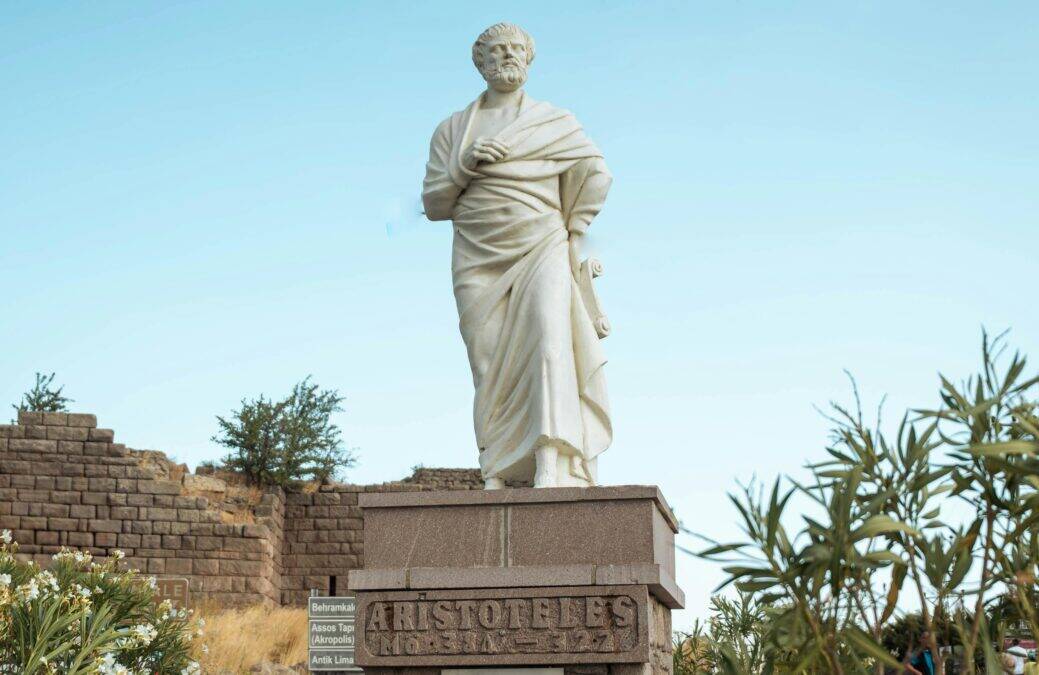
Aristotle’s Nicomachean Ethics: What It Teaches Us About the Good Life Today
Aristotle’s Nicomachean Ethics
For more than 2,000 years, Aristotle’s Nicomachean Ethics has shaped how people think about the good life, happiness, and what it means to live well. Yet this ancient text isn’t just for academics in dusty libraries—it’s a practical guide for anyone who wants to build better habits, improve relationships, and understand what really matters.
To understand why Aristotle’s ideas remain so powerful, it helps to see how he built on—and broke from—the two giants who came before him: Socrates and Plato. Their conversations laid the foundation for one of history’s most influential visions of human flourishing.
Let’s walk through the key themes of the Nicomachean Ethics, how Aristotle developed the philosophical ideas of his teachers, and why this 4th-century BCE book still speaks directly to our 21st-century lives.
From Socrates to Plato to Aristotle: A Lineage of Big Questions
Aristotle didn’t invent moral philosophy from scratch. He inherited a tradition of questioning that began with Socrates, the famously curious Athenian (creator of the Socratic Method), who went around asking people things like “What is courage?” and “Can anyone knowingly do wrong?” Socrates believed one big idea:
“Virtue is knowledge. If you truly know what is good, you will naturally do it.”
Plato, Socrates’ student, took this even further. Plato refined the idea of the Cardinal Virtues, and in his view, moral truth exists in a higher, eternal realm of Forms. If you want to live well, you must align your soul with the perfect, unchanging Form of the Good.
But Aristotle had a different perspective. He agreed with his teachers that the good life was the ultimate human goal—but he wasn’t convinced that abstract knowledge or contemplation of ideals was enough. After all, plenty of people know what they should do but don’t do it.
So, Aristotle grounded ethics in the real world. For him:
Ethics is about action, habit, and daily practice—not just ideas.
One of the most important themes in the Nicomachean Ethics is eudaimonia, usually translated as “happiness,” although “flourishing” or “living well” captures the meaning better.
For Aristotle, happiness isn’t a feeling, a mood, or a lucky break. It’s not the pleasure of a great meal or the thrill of achievement. Instead:
Eudaimonia is the long-term result of living a life of virtue, purpose, and fulfilment.
You don’t “get” happiness—you build it through your choices and habits.
Dr Martin Seligman, often referred to as the “father of positive psychology,” is a professor at the University of Pennsylvania and has conducted extensive research on happiness. He agrees with Aristotle’s premise and that pursuing certain activities, through conscious choices, is central to building lasting happiness. He identified five key elements for well-being, captured in the PERMA model (Positive Emotion, Engagement, Relationships, Meaning, Accomplishments).
2. Virtue as a Habit: You Become What You Repeatedly Do
One of Aristotle’s most famous insights is that virtue is a habit. You’re not born generous, brave, patient, or wise. You become these things by practising them—over and over—until they become part of who you are.
“We are what we repeatedly do.”
For Aristotle, moral excellence is like learning an instrument. You don’t read about guitar—you play it. The same goes for courage, kindness, honesty, and self-control.
We develop these habits in the same way as any other. As Charles Duhigg demonstrates in The Power of Habit, and James Clear builds on in Atomic Habits, we improve our actions by influencing the Habit Loop, and adjusting the cues, routines and rewards linked to our activities.
3. The Golden Mean: Finding Balance Between Extremes
Another core idea of the Nicomachean Ethics is the Doctrine of the Mean.
Aristotle argues that every virtue lies between two vices. For example:
Courage lies between rashness and cowardice.
Generosity is a balance between wastefulness and stinginess.
Confidence sits between arrogance and timidity.
The “mean” isn’t a perfect mathematical centre—it’s the balanced spot that depends on the situation.
Virtue is the art of acting appropriately, at the right time, in the right way, for the right reasons. So, it takes wisdom to assess where that balance lies at any one time.
4. Practical Wisdom: The Key to Making Good Decisions
Aristotle introduced the concept of phronēsis, often translated as practical wisdom. It’s about reading a situation, understanding what the moment requires, and making the right choice.
It’s the inner compass that helps you find the “mean” between extremes.
This practical wisdom emphasises and expands the value of wisdom, one of Plato’s four cardinal virtues.
5. Friendship: The Highest Form of Human Connection
Aristotle dedicates two entire books to friendship. He outlines three types:
Friendships of pleasure
Friendships of usefulness
Friendships of virtue
The last is the deepest and most enduring, rooted in mutual respect and shared values.
Therefore, choosing the right friends is important. As C.S. Lewis notes in his book The Four Loves:
“Friendship (as the ancients saw) can be a school of virtue; but also (as they did not see) a school of vice. It is ambivalent. It makes good men better and bad men worse.”
6. Responsibility and Choice: You Are the Author of Your Life
Aristotle argues that we are responsible for our actions, our habits, and ultimately our character. Your repeated choices shape who you become. This is empowering—your life can be directed through intentional action.
This tallies with Eastern Philosophy as well. For example, Lao Tzu (Laozi) said,
“Watch your thoughts, for they become your words; watch your words, for they become your actions; watch your actions, for they become your habits; watch your habits, for they become your character.”
In modern psychology, Carl Jung showed that our personality type informs our preferences for how we interact with the world. But our personal values and moral choices shape our character.
As David Brooks points out in The Road to Character, rather than just Resume Values and a list of empty accomplishments, we need to focus on Eulogy Values – the things we want to be remembered for.
Aristotle’s ideas connect easily to modern life. His thinking is foundational to:
Self-development and habit-building
Ethical Living and Values-Centred Leadership
Mental health and well-being
Healthy relationships
His message remains timeless:
Happiness is not something we feel—it’s something we cultivate.
So, what positive first step can you take today to flourish more and live a happier life? Take a few minutes now to reflect and commit to one small action. That’s all you need to start creating a better habit and put you on the path to a more fulfilling life.
And if you would like any help thinking through what good looks like for you or assistance in developing your new routines, please do drop me a note via the Contact Page.
If you want the right answers you have to start with the right questions
About The Right Questions
The Right Questions is for people who want to lead better and make better decisions. We are all leaders as we all have influence, no matter how much or how little. So, how are you maximising your influence?
If you are unsure, just drop me a line. I would love to help!
Do you want to lead better? Would you like to make better decisions? Want support in achieving your goals? Get in touch and let me know how I can help!