The Dark Triad Traits: How They Evolved Into the Dark Tetrad, The Science Behind Them, and How to Spot Them in Leaders
Dark Triad & Dark Tetrad Traits in Leadership: How to Spot Toxic Leaders
The Dark Triad and Dark Traits Tetrad
The psychology of leadership has long been fascinated by charisma, ambition, and resilience. But beneath the surface of many successful leaders lies a darker personality cluster known as the Dark Triad — and its modern evolution, the Dark Tetrad. These traits don’t just influence behaviour; they can shape workplace culture, ethics, and long-term organisational success.
In this article, we’ll break down:
What the Dark Triad and Dark Tetrad personality traits are
How the concept evolved
The scientific research behind them
Practical questions you can use to identify these traits, especially in leaders
What Are the Dark Triad Traits?
The Dark Triad is a psychological theory introduced by Paulhus and Williams (2002). It describes three socially aversive personality traits.
The Dark Triad
1. Narcissism
Narcissism is characterised by:
Grandiosity and inflated self-importance
A constant need for admiration
Lack of empathy for others
In leadership, narcissists often appear confident and visionary, but they may exploit others to keep their position. Their self-orientation erodes trust, and their priority is to maintain their self-image.
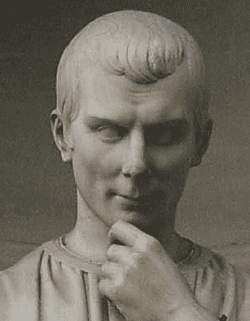
Derived from the writings of Niccolò Machiavelli, namely The Prince, this trait involves:
Strategic manipulation of others
Emotional detachment
A focus on self-interest and power
Machiavellian leaders are often highly political, calculating, and skilled at manipulating power dynamics. The most important thing to them is winning, so this can be done by any means.
Tom Ripley (played by Matt Damon) in The Talented Mr. Ripley (1999) is an example of a true Machiavellian. The Marquise Isabelle de Merteuil (Glenn Close) and the Vicomte de Valmont (John Malkovich) also play machiavellian characters in Dangerous Liaisons (1988).
3. Psychopathy
Psychopathy is the inability to connect emotionally. In organisational settings, it is typically “subclinical,” meaning not DSM (Diagnostic and Statistical Manual of Mental Disorders) or Antisocial Personality Disorder (ASPD). Even when not a clinical diagnosis, it can still be harmful. It includes:
Lack of guilt or remorse
Shallow emotions
Impulsivity and risk-taking
Leaders with psychopathic tendencies may appear fearless and decisive, but can be ruthless and unethical. They completely lack emotional intelligence. They are driven by stimulation and success, but do not care about the impact on others.
In the 2007 film There Will Be Blood, Daniel Plainview (played by Daniel Day-Lewis) is a leader with psychopathic tendencies. Another notable example is Anton Chigurh (portrayed by Javier Bardem) in No Country for Old Men (2007).
Researchers later identified that the Dark Triad didn’t fully capture the full range of harmful personality traits observed in individuals. This led to the introduction of a fourth trait:
Unlike psychopathy, which involves emotional coldness, sadists actively derive satisfaction from causing harm or humiliation.
In leadership, this can appear as:
Public shaming
Bullying management styles
Creating high-stress environments for “motivation”
Their core motivation is the pleasure that they get from another person’s pain.
Examples from popular culture include Amon Goeth (played by Ralph Fiennes) from Schindler’s List and Terence Fletcher (played by J.K. Simmons) from Whiplash.
Scientific Research and Evidence on Negative Leadership
The research into the Dark Triad and Dark Tetrad builds on a body of historical work exploring harmful leadership. As such, other terms for negative leaders have also entered our lexicon. Blake Ashforth coined the term “petty tyrants” in 1994, and Dr. Marcia Lynn Whicker popularised the term “toxic leader” in 1996.
Paulhus & Williams (2002)established the Dark Triad framework, and since then a growing body of research highlights the real-world impact of Dark Triad and Tetrad traits.
Key findings from organisational psychology include:
Babiak & Hare (2006): Found that corporate psychopaths can rise quickly due to superficial charm and risk tolerance.
Spain, Harms & LeBreton (2014): Linked Dark Triad traits to destructive leadership, workplace conflict, and unethical decision-making.
Buckels, Jones & Paulhus (2013): Demonstrated that everyday sadism predicts trolling, cruelty, and enjoyment of harming others.
Kircaburun & Griffiths (2018): Showed that people high in dark personality traits may be more vulnerable to developing problematic online use
How the Dark Triad and Dark Tetrad Relate to the Big Five (OCEAN) Model
In psychological research, the Dark Triad and Dark Tetrad traits also show strong, consistent relationships with the Big Five (OCEAN) personality model, which measures Openness, Conscientiousness, Extraversion, Agreeableness, and Neuroticism.
Research consistently shows that individuals high in dark traits tend to score very low in Agreeableness, reflecting a lack of empathy, cooperation, and concern for others.
Narcissism is typically associated with high Extraversion (assertiveness, dominance, and social confidence), while Machiavellianism and psychopathy are linked to low Conscientiousness, indicating impulsivity, poor self-discipline, and a greater willingness to break rules.
Psychopathy, in particular, is often connected to low Neuroticism, meaning these individuals tend to feel little anxiety, fear, or guilt.
Sadism, the fourth element of the Dark Tetrad, is most strongly related to extremely low Agreeableness and reduced emotional empathy, explaining why such individuals can enjoy causing psychological or emotional harm without distress.
Performance Paradox
Interestingly, these dark traits are often associated with short-term success, but they do long-term damage:
Leadership roles naturally attract individuals who are:
Ambitious
Status-driven
Comfortable with power
Dark Triad and Tetrad traits can be helpful in competitive environments, which explains why these individuals often rise to senior positions. In situations where people attract a lot of personal criticism, such as politics, these traits also give people an advantage as they don’t care less about what other people think.
However, without strong governance and accountability, these traits often become destructive.
The goal isn’t to eliminate ambitious or bold leaders — but to balance power with accountability. All personality traits exist on a spectrum, so the aim is to manage extreme characteristics and damaging behaviours.
The Dark Triad and Tetrad: Final Thoughts
The evolution from the Dark Triad to the Dark Tetrad reflects a deeper understanding of how harmful personality traits operate in leadership and organisations.
While individuals with these traits can appear charming, strategic, and successful in the short term, the long-term organisational damage can be profound.
Understanding these traits empowers organisations, boards, and employees to make smarter leadership decisions, promote healthier cultures, and protect long-term performance.
So, take a moment and think: whodo you know who is displaying the Dark Triad or Dark Tetrad Traits?
What positive action can you take to limit the damaging impact of these behaviours?
If you want the right answers you have to start with the right questions
About The Right Questions
The Right Questions is for people who want to lead better and make better decisions. We are all leaders as we all have influence, no matter how much or how little. So, how are you maximising your influence?
If you are unsure, just drop me a line. I would love to help!
Do you want to lead better? Would you like to make better decisions? Want support in achieving your goals? Get in touch and let me know how I can help!